Showing posts with label UK. Show all posts

Wednesday, 4 November 2015

Rosemary and Rue

Image sourced from here
I wasn't sure what to make of this book. Hands down, it's got probably the best intro twist in the first 10 pages that I have read out of any urban fantasy. But after this, I was wondering if it was just going to be a Dresden rip off. You know, fairies instead of wizards, San Francisco instead of Chicago, female instead of male, still drives a punch buggy.

But I was pleasantly surprised as the book comes into it's own. The lore and the magic system is fun and detailed, and hints back to real world myths and legends. I love it when a book does that. Toby is sassy and competent, which is always annoying that I find this a surprise in a female character.

Toby was a private detective of the fairy variety, and is a changeling herself. Until something happens that makes her want to stay the hell away from the fairy realm and society. Of course, until something happens that can't keep her away and also requires her special private detective skills. Throw in an ex-lover or two, and we have a great vaginal fantasy read.

And it was for about 250 pages. First 200 are good, the last 50 are good. But the middle 100 needed an editor or a tidy up or something. But I am hoping that is something that will come with experience as a writer for her. As this is the first book in the series, and I believe published by her, and there are many more of both I will pick up and try. I do like me a fairy.


Monday, 28 September 2015

Salmon Fishing in the Yemen

Image sourced from here
My Dad read a lot. But he read things you could learn stuff from (gardening, wildlife, natural history, woodworking, diy, history, military, politics, etc books) or biographies/autobiographies of sportsmen or military persons. So much so that when he passed away and my Mum came with us to his flat, she remarked that copy of The Bourne Identity was the first novel she had ever seen in his possession. And she had been married to the man for 15 years at one time.

So that being said, the only novel my Dad ever recommended to me to read was this one. From what I can piece together, I think he had borrowed it from the library as he thought it actually was a book about fishing in the Yemen. It wasn't, and isn't, but Dad being Dad, seeing it was in his house for a month, he'd give it a go. And apparently he loved it.

I can honestly see why. It's the British kind of absurd he loved. It pays the crap out of those ridiculous people in London doing ridiculous things that his kind of Northerner doesn't get, and really, I only do as I live in the bureaucratic capital of another country. It's Yes Minister, but with fish and the Middle East. It is bloody funny.

It's a tongue in cheek look at the most boring man in British history who has been commissioned against his will through his civil service job to see if salmon fishing in the Yemen is possible. The book then follows him and his colleagues through the project and it's misadventures, and how it changes them.

It's also a rather insightful look into the political machine and British foreign policy regarding the Middle East in the 2000s. I'm glad Dad told me to read it actually. What I like about this book is very similar to what I loved about Dad honestly. Something so ridiculous and outrageous, in him the crazy Yorkshireman with the outrageous stories and the cheeky smile, but if you push further there was actually an incredibly nuanced understanding of foreign and military policy hiding within, both in the book and Dad. But Dad also had great information about growing tomatoes ;)


Sunday, 6 September 2015

I'm Not Dead!

2015 has not been my reviewing year. I do apologise if people do follow this blog for reviews. I have been slack and lame. I also have been through such an intense reading slump. I didn't finish a book from mid-June to August. Just nothing I picked up worked for me, and I now have a whole heap of half read books littering the house.

I also have a pile of books from pre-slump and post-slump sitting here to review. So once again, let's knock those over quickly, and then I'll get my shit together from now on.

A Study in Scarlet

First Sherlock book I have read, although obviously well acquainted with the world and characters. I really enjoyed the original book though, and felt that the book was incredibly easy to read over a hundred years later. Also made me really respect the latest BBC series SOOO much more, and I didn't think that was possible.


The War of the Worlds

Wins for the best use of the word "ejaculation" I have seen for a long time. I can see why it is a classic, and I can see it was completely mind blowing at the time. I did find it dragging in parts, just a slow pacing that Victorian novels can have. I am glad I read it, but I was a little let down due to all the hype I have heard for years.


Cocaine Blues

Phryne Fisher is more badass in the book than the series. Sometimes to the point of ridiculous, but more badass. But great intro to the 1920s lady detective running around Melbourne causing mayhem. And different enough from the series that you can happily read and watch with only minimum spoilerage.


Faceless Killers

Another intro to a detective I have watched on TV. Due to this, I spent the entire book imagining Wallander as Kenneth Branagh, and his offsider as Tom Hiddleston. I was slightly annoyed as I had watched this story a few times, but couldn't remember the ending and it bugged me. But this was not the book's fault, it was a victim of it's own success. Another good Nordic Noir series to stick your teeth into.


The Ocean at the End of the Lane

Oh my. Neil Gaiman. Gush. This book delivered on all the things you want in a Neil Gaiman novel and I devoured it in hours. Just a beautiful book.


The Oxford Murders

An Argentinian maths student gets a scholarship to Oxford to study, and it quickly drawn into the investigation of a serial killer. Maths puzzles, logic sequences and pattern recognition plays a large part in the book and takes it to another level than a standard murder mystery. I couldn't work out the time period though, and that bothered me with the attitude to women by the main character.


Jar City

I've avoided reading this book for a while, due to the English publishers ignoring series order and just publishing willy nilly. But I've waited so long, and it fitted a Toppler read so well, I just went for it. I am glad I did though. Icelandic murder mystery, not as dark and gritty as other nordic noir, but quite enjoyable. Standard fare really, but enjoyable and well told.


Ready Player One

How much nostalgia can you fit into one book?! This is an 80s-early 90s kid's heaven. So many memories, in a great adventure thriller. The world has descended into a dystopian future, where we spend all our time if we can plugged into a virtual world. It's like what would have happened if all the predictions about Second Life had come true. But throw in a quest and pursuit of an evil corporation, and it's just brilliant.


Moon Called

Too many hairy werewolves, for me, to, bear. I'm not a fan of werewolves and this is the best werewolf book I have read. I really like Mercy, I liked the world, the story was not too bad. I wanted to know more about everything else besides the werewolves though, like the fae and how they all worked. I would continue the series, as I enjoyed it enough, but it seems to be all werewolf based. I'm not sure if I can handle that.


The Messenger of Athens

Death of a young woman thought to be an adulterer on a small Mediterranean Greek island. Written off as an accident but thought by all as a suicide. Until an investigator from Athens shows up and asks questions. I liked the setting and the place. I wasn't fussed with the story. Didn't care for the characters, and again, was pissed off with the treatment of women in the book. I thought it was 1960s or so, then right at the end of the book we are given a timeline and I worked out it was 1994. Not on. Don't think I'll carry on with this one.


Saturday, 21 March 2015

One of Our Thursdays Is Missing

Image sourced from here
I've been putting off this book for a while. Jasper Fforde and I have a turbulent relationship. The Eyre Affair is one of my favourite books ever. The next two I enjoyed, I love his writing style and his layers upon layers of literary jokes, but they slid down the meh slope for me. Then, as I owned them all by now, I got to Something Rotten and the love affair was back on. Restarted the series and we were back to meh. But a friend told me he loved the 7th book like the 1st, so I made myself pick this one up.

For this book, we are back in Bookworld. The thought that goes into Bookworld is always impressive, and this book came with a map! Love maps in my books! We are cruising around with written Thursday and soon discover that real Thursday has gone AWOL. Written Thursday sets about finding her, particularly as there is a civil war looming between Racy Novel and Women's Lit, that real Thursday is holding peace talks for.

Bookworld is so much more layered for me now, as my own reading has gotten more layered. I get more jokes and allusions. I wonder if I would enjoy the earlier books more now with this knowledge. And so many puns! Amusing, and sometimes incredibly clever. I can't believe all of it comes out of one man's mind.

But with all this added in, did I love it? Nope, but I enjoyed it. I am back on the side of reality in expectations for the next one, and hopes it surprisingly blows my socks off.


Thursday, 19 March 2015

Hide and Seek

Image sourced from here
The second installment of Inspector Rebus. Rebus has had a promotion, but lost the girl. And we start the book with him being called to the body of a junky in a housing estate outside of Edinburgh. But the junky seems to be placed in a ritualistic way with witchcraft symbols around him. Over the investigation, more and more ties this junky to the elite world of Edinburgh, which shows the dark side of city doesn't discriminate by class.


Friday, 6 February 2015

Case Histories

Image sourced from here
I received this book as a Christmas present from my father in law several years ago. We were going to spend Christmas with him again last year, so I had to read this before I showed my face.

This book is about an ex-cop, ex-soldier, Jackson Brodie, now turned private detective. However we start with three cold cases that are then explored throughout the book.

I'm not sure really why there are three. As although all are explored a little, only one really gets a lot of attention. I would have probably suggested if I was the editor, that maybe only one was necessary and you could save the other two for other books. Mainly because I felt one story was given the majority of the time, with the other two shoved in as plot devices or afterthoughts.

I also felt that some of the pretty heavy themes in this book where just thrown in and never dealt with. I'm all for heavy in my books, but explore and deal with them. Don't shove in an issue in order to show how edgy you are or whatever and never deal with it. It's almost irresponsible authoring.

I'm not really sure why I was gifted it. I believe it was because it was read and enjoyed, so was passed on. Unfortunately I didn't really feel the same.


Sunday, 1 February 2015

Sex with the Queen

Image sourced from here
If you want to learn about royal history across Europe, over hundreds of years, this book and it's predecessor Sex with Kings, are the books for you.

I really enjoy this author. She has a way of taking history and making it fun. A lot of that is through her writing and prose, it's accessible and doesn't feel like you are reading a history book. She also has a way of writing about the subjects which make them feel more like characters in fiction than real people. I guess you can say that in some ways, royals are.

This book takes us through the halls of palaces in Germany, England, Russia, France, Spain and Italy looking at the women who were the most powerful women in their lands. And the things they got up to either in secret or with everyone's knowledge. She handles her subjects with grace and dignity, and without judgement.

Until.

Until we hit Diana. Then you can feel the judgement and almost scorn seeping out of the pages. Which was so so disappointing when the rest of the book was handled very differently. It left an icky taste in my mouth, wishing that I had stopped reading that chapter earlier. So I recommend that you all read the book, but stop that chapter earlier.


Sunday, 16 November 2014

Changeless

Image sourced from here
I'm sorry I am about to review (briefly) a book that isn't the first in a series on here. I started this series before I started blogging, and long before I started Goodreads. It happens, and it will happen again.

This book is the second in the Alexia Tarabotti series. Although she is now married to Lord Maccon, so really is Alexia Maccon now. The book picks up in the same whimsical, Victorian, steampunk, supernatural, romance thread as the first. Although, now we are all married, there is less heavy breathing and a lot more bottom descriptions. This is not a complaint, just an observation.

Besides bottoms, the book has us with the Maccons in wedded, sexy bliss, however Lord Maccon buggers off North on werewolf business without telling the newly acquired wife. The Wife, being Alexia, promptly snoops around (or is duly told about in her position on Queen Victoria's Shadow Council) and then follows husband dear to Scotland to solve the mystery and to save Britain.

Now. I was all on board. I was even lording this one as better than the first. And I still think it is, except for the last chapter. It all left a nasty taste in my mouth. I hope it gets sorted sooner rather than later, as I am happy to give it up if it continues along these lines. I love this series as a fantastical diversion, but this screams too much real life for me, even though the problem is reasonably explained in the magical world the book exists in (although no one is listening). I will give Gail Carriger the benefit of the doubt as she has surprised me in every book. But I am both interested and hesitant at what will be in store for Alexia in the future.


Tuesday, 30 September 2014

Wuthering Heights

Image sourced from here
Well. That's done. I've been meaning to read Wuthering Heights for years. It's a "Classic" (so along with that goes all the cultural references I have never really got). The Brontes are hailed in some circles as better than Austen. It's the most romantic story ever written.

Let me address those assertions. Bullshit.

Wuthering Heights is a book about the most stubborn, sullen, sulky, self-centred, selfish (I've unintentionally gone to alliteration and I have now run out of s words), prideful, petulant, bad tempered, greedy, hypocritical individuals I have ever had the displeasure of reading all shoved into one book.

I'm at a loss of why the book has been taught in high schools around the world for years. The story isn't particularly interesting or complex. The writing and language is easy to read and understand, which possibly makes it a more accessible option. Some people may have problems with the dialect parts, but to me that was just a Yorkshire accent. I actually stopped reading it as although I could understand it, it did take a bit of brain power to switch in and out of it and most of what Joseph said was rubbish anyway. Is it taught with the lesson "all these characters are who you should not grow up into"? Because that would make sense, a warning not to be like them.

This is a book of abuse. Really, that's what it comes down to. Severe manipulation of people, with liberal sprinklings of physical, emotional, psychological, and no doubt in my mind in the background, sexual abuse. Now I am far from being a prude or easily offended. I have read many a book that deal with these issues and themes. But in most other books there is a story that turns those situations into plot devices. Wuthering Heights doesn't have this. It is a chronicle of how people wish to control and/or destroy other people, mainly for the sake of it. It left me feeling a bit off in places.

And for the romance. There was hardly anything. There was fighting, sulking, screaming, name calling, shunning but not romance. I knew beforehand that Heathcliff and Cathy were supposed to love each other, but I would have found it hard to see if I didn't have that context. Life is too short to have a relationship like theirs, and it definitely is too short to read about it.

Positives? Well, as I said it was easy to read for a classic. That's good. I will now understand cultural references made about Wuthering Heights, so I can appear more intelligent in very certain conversations. And the moors. Can't go wrong with the moors. I can frolic over the moors myself and leave Cathy and Heathcliff behind.


Monday, 25 August 2014

From the Land of Green Ghosts - #53

Image sourced from here
Growing up, I knew of the country Burma. I knew of Aung San Suu Kyi and that it was terrible she was locked up in her house. I knew Burma was a dictatorship, and depending who you talked to, the word "communist" was thrown around now and then. And... that's about it.

So after my fail of a read for Burma earlier in the tour, I really wanted to make sure I read a book that taught me something about the country. So when someone in our Around the World group suggested a book written by a member of the Padaung tribe, widely known as the tribe where some women have brass rings lengthening their necks, I had to read it.

What we get is a beautiful, slightly poetical, incredibly South East Asian account of Pascal's life. We start with his life in the tribal hills with the Padaung, looking at the beautiful mix of missionary Catholicism with animist, Buddhist and tribal beliefs. Then his transition to seminary school in the city, to University student in Mandalay. You get a wonderful insight of the incredibly remote village boy changing to a city dweller.

This is where the story starts to change a bit from the usual coming of age story we are used to. While in university in the 1980s, Pascal is involved in the student uprising and demonstrations against the dictatorship. In the first third of the book, we had been given insights what it was like living under the regime, their propaganda and their whims and how this affected the Burmese. In the 80s, some students and monks protested against the regime and some people were shot. Then more protested, and more were shot, and so on and so forth. Then we have Aung San Suu Kyi enter on this wave of unrest and talk about democracy, and provided a united front to the people.

Pascal takes a while to come around to the movement and cause, but ends up being pursued by the regime. He ends up as a fugitive in the jungle, with other rebels who have been fighting the government for years with different causes, living on the Thai border. Eventually, after all of this, he gets rescued by a Don of English from a Cambridge college whom he met briefly in Mandalay before the trouble, and granted permission to travel to the UK and study English at Cambridge.

It's a book of contrasts in a way. Tribal verses city. Fugitive verses complying citizen. Seminary student verses other ways of life. Burmese verses UK. I must say it's the last contrast that does make me feel a bit ill. He talks about the way of living after he is rescued and it makes me sick with the extravagance compared to the poverty not only in the next country, but within Thailand. Having been there in the last year or so, it's apparent how much we have compared to every day Thais, let alone people who's entire country and economic status has be completely destroyed and devalued in the nation next door.

But this astonishment and even understandable bitterness is not displayed at all, if it is there, even when he talks about times of despair and depression. The book has this air of gratitude about it. Gratitude for being alive at all. For surviving childhood. For getting a chance at education. For being rescued. For having a chance a handful of his fellow countrymen have ever been offered in a foreign country. And I think that is the takeaway from this book. You should read it and understand the story of this country we all know little about, and the diverse cultures and traditions within it. Read it and be grateful that you are in a place where you can read these stories, that you are healthy, have means and education, and overall are safe. We are so very lucky for that.


Wednesday, 25 June 2014

The Children of Men

Image sourced from here
First up, I can't get my head around the science of this book. I don't think that was the point at all. The author had an idea, and then built the story up around that idea. What happens to our world if we just stop reproducing. Not by choice, we just stop. How would that fundamentally change our society? How would we act? What would we care about? Really interesting premise, mass sterility. However, I can't get my head around that basic biological fact.

But one scientific problem is dealable. Unlike previous reads where all science seems to be completely and utterly thrown out the window. Here is this problem, can we deal with it and move on? Especially seeing it's not dealt with in detail, just as a thing we know about? Answer is yes. I could move on.

And I am glad I did. PD James' storytelling is great. I really do like her writing. She just has that style of writing that draws you in, envelops you and makes you feel safe. Which is a weird feeling when she is telling you about the dictatorship that has taken over the United Kingdom, or the state enforced "suicides" of the old and demented (interestingly enough, in the idyllic, seaside village where I visited my friend doing her gap year. The school is mentioned by name), or you know, the mass extinction of your species. But don't worry too much dear, have a cup of tea and a biscuit. It completely suits the book though, with an ever ageing population with no children to replace it.

While there are flashes of brilliance in this book, like the storytelling, or moments within the story, I wasn't overly won over. I liked the dictator, even though he had a weird authoritarian system in place. But there were elements of that regime that I understood and even vaguely agreed with (although implementing them would be a completely different thing all together). I didn't overly like our protagonist. I didn't buy the "love" story at all. And I must admit there was a whole element of "saviour" that I found a little odd.

The book took an interesting idea and explored it slightly. Then whacked it together with a lot of other thoughts. Some of them worked for me, some didn't. Glad I have read it, but I won't be bashing down anyone's doors forcing them to do the same.


Tuesday, 24 June 2014

Knots and Crosses

Image by me.
I've been meaning to read a Rebus novel for a very long time. Ian Rankin has almost grown to mythic proportions in my world over the last 9 years. At uni, a friend of mine (who went on to be a housemate and so much more) wrote her Honours thesis on these books. For most of that year, I couldn't for the life of me actually work out what her thesis was about. I thought I was missing something. But it has ended up sinking in. For one whole year of her life, she wrote about and studied Scottish murder mysteries and crime fiction. I also have realised I chose the wrong degrees.

So I eventually thought I needed to work out what all the fuss what about and got myself the first Rebus novel. This book did read like a first novel in many ways. Every now and then there was a clunky turn of phrase or a little logic jump in the plot. But if I had written this as my first novel, I would have been incredibly happy.

Mainly because it does exactly what I as a reader want my crime fiction to do. Give me an interesting protagonist with a good background story to fill in the down times of the book, who tracks down clever nasty people and stops them from being nasty again. Rebus seems to have buckets and buckets of back story as well (yay for troubled, broody, European policemen. Where would us crime readers be without them?).

The bonus to this book is that this is all happening in Edinburgh so the book is full of Scots, and also has that absolutely beautiful city as a backdrop. I am so fortunate to have gone there before reading this book. Rankin turns the city into an inseparable part of the novel, like a character really, that just adds this other dimension to the story.

It's a short novel (I read it in a day), and a pretty good read as an introduction to a series ... 18?... books long. I will be revisiting Edinburgh and paying another visit to Inspector Rebus, without a doubt.


Sunday, 1 June 2014

Fingersmith

Image sourced from here
Sarah Waters is a genius. A twisty, little genius. She has this ability to lead you along a story, where you are all comfortable with how it's going, and how it got there. But then she completely spins you around without warning. Everything you relied on is wrong, and yet makes complete sense just like the story you believed in the first place. And you feel so goddamn stupid that you never, ever saw it coming. But it's okay, you'll pay attention now, you've worked out her ruse. Then BAM! She does it again! And again and again... genius.

Fingersmith, from the three books I have read of hers so far, is the most adept at this. Possibly because the subject matter lends itself more easily to this. The book focuses on two characters playing a con on a rich, young woman in order to access her fortune. The list of characters feature con artists, forgers and petty thieves. It's a clever concept and one Waters executes fantastically.

What I will remark on though, is that compared to Affinity and Tipping the Velvet, the sense of place is not as developed in this book. In her other books I almost felt that London was a character in her books, but not so much this time. Mind you, with so much else going on, this may not have been such a bad thing.

I'm sorry for the vague review. I just feel like if I discuss the book in more depth I will accidentally spoil something for you. I also do feel like I have hit a bit of Sarah Waters fatigue. I tend not to read the same author in a row very often, or even the same genre back to back. And I have read 3 of her books in 6 months, 2 within one month, due to group reads and buddy reads that came up and I didn't want to turn the opportunity down. I wonder if I had read it later if it would have been a 5 star for me? All speculation, but still a brilliant read any way.


Wednesday, 21 May 2014

Neverwhere

Image sourced from here
Neverwhere is one of those books I never really want to review. Just because I really do not think I could possibly do the book justice.

Disclaimers out of the way, you probably already know I am a big Neil Gaiman fangirl. Also, I own the TV series that Gaiman had originally written, so I knew vaguely what was going to happen. Gaiman was asked to write a TV series, to which he wrote Neverwhere. However, he apparently found the experience incredibly frustrating as the producers and directors kept on cutting out parts of the dialogue and the story. He then wrote a book, that got played with by publishers to sell better. So this version of Neverwhere, is the story he wanted to tell.

The story tell us of Richard who lives in London, and an encounter he has with a girl who appears out in front of him from nowhere on a busy London street, bleeding and begging for help. Much to his high achieving, social climbing girlfriend's protests, he helps the girl and hides her in his flat. This action embarks Richard on a weird and wonderful adventure that timid Richard never would have ever dreamed about, through a world that exists underneath London, London Below.

The whole concept of London Below is fantastic. The thought that there is a parallel city to London Above (or what we would just call London) is actually not so hard to imagine. The city has been reshaped and rebuilt on itself for 2000 years. Each time that happens, more tunnels, corridors and structures get forgotten. The forgotten Tube stations are a great example. Spaces that are intricately built but not needed any more. Not only that bits of the city itself gets forgotten, but the inhabitants of London can get forgotten as well. In fact it's a way we refer to homeless and destitute people already.

The other beautiful thing about this book is it turns the city into a character. Whether that is the turning of places and landmarks into actual characters like Old Bailey or the Angel Islington, or turning them into the literal meanings of their names eg. Knightsbridge or Shepherds Bush, but also the city itself is an overwhelming presence in the book. It's an entity that follows you the entire time.

I must say I probably loved it more as I spent time in London last year so it was all nice and fresh in my mind again. But I am still slightly torn whether American Gods is still my favourite Gaiman. I think it is, but only by a rat's whisker.


Tuesday, 29 April 2014

Affinity

Image sourced from here 
Sticking with the gothic theme for a bit. Affinity is a book I actually hadn't heard that much about. But after loving Tipping the Velvet so much last year, the last time I was at the secondhand bookshop I picked it up. Which was fortuitous as there were a few other Sarah Waters options, but this was the one chosen as a group read for April.

The book is another Victorian London historical fiction. We meet Margaret, the eldest, single sister in her family, as she starts her first day as a Lady Visitor to the infamous Millbank prison. Millbank is not a particularly nice place. At least by this stage, the worst prisoners in England were sent to another prison in London, but this was still not a nice place to end up at all.

Inside Millbank, Margaret meets a prisoner called Selina, who is a spiritualist. We all know how fascinated the Victorians were with the occult, spirits, magic and the like, so it isn't a surprise that Margaret is fascinated with Selina and her abilities, and ends up being drawn in deeper and deeper.

Right, so, we can all guess by now that I am a skeptic. In my experience these kind of people prey on people desperate for a message from someone they throw tells and information into the medium's lap. HOWEVER, the disclaimer for this book is that I wanted it to be all true for the story. I  am never one to let facts get in the way of a good story. Unless you swear to me something is a scientific fact and it is blatantly wrong. That pisses me off. Otherwise, I'm all for a bit of fun.

And while I wouldn't describe this book as fun, and while I couldn't completely disengage my disbelief this book drew me along quicker than I would have thought. And talk about a twisty ending!! I was hanging around 3 stars until I started hitting the twists. I didn't like it as much as Tipping the Velvet. I thought it may have been her first book, but looks like it was the second. And then it struck me, that was the problem with this book. It had a lot of second album syndrome to it. It wasn't bad, just felt a bit rushed and not quite as thought through as that debut.

A short review I know, but still a fun and surprising Victorian, gothic read.


Sunday, 23 March 2014

The Rook

This is an exceedingly clever book. In an nutshell, this book is like Neil Gaiman and Jasper Fforde had a beautiful, beautiful Aussie love child.

Daniel O'Malley is a Canberran author. I somehow, and am still not sure how, managed to score a copy off his Mum (who I actually don't know). But now that disclosure is out of the way, in case I wasn't clear before, this is an absolutely fantastic book.

The Rook is an urban fantasy set in London. We start the book meeting Myfanwy (pronounced Miffany by the way, not Mif-fan-way) Thomas, the protagonist, in a park, in the rain, surrounded by a whole heap of dead guys, wearing gloves. Oh, and she can't remember who she is. In terms of beginnings, not a bad one. We go on to find that Myfanwy knew this was going to happen and has left new Myfanwy lots of info in the form of letters and folders to help her along, and make a choice about her new, inherited life.

This sounds like it could be a terrible way of disclosing information to the reader. But it's not. It's bloody well executed. We find out the lore and background to this urban fantasy and the characters as we need it, in an unjarring way. It bombards you with the info you need in an accessible and believable way. *THIS* is something incredibly hard to do, and honestly a lot of fantasy and sci fi fails at. The amount of times I have tuned out the 3 chapters of mind numbingly boring history of a world in fantasy or sci fi.

That's one element of the cleverness. Another is the world. It is well thought out, plausible, and just fun. I mean, supernatural powers, secret service, tied up in history. What's not to love? But on top of this, the world building is fantastic, and actually rather unique. And that is possibly the highest compliment that one could give an urban fantasy these days.

The most important for me, is this book is fricking hilarious. It is rare that a book in this genre is able to poke so much fun at itself, and everything around it. The humour is just leaking out of it. Whether it is his Australian command of a metaphor or a simile (there is a metaphor or a simile for everything if you try), or his poking fun of Americans (love you all, but some of his lines made me snort beverages out my nose) or any other nationality, or just sarcastic observations in general, the guy is funny.

And it all just made the book a pleasure to read. Action, intrigue and funny. This is my point about the Neil Gaiman and Jasper Fforde Aussie love child. He takes the elements that I love of both authors; world building, story, action, intrigue, and wit. And puts an Aussie spin on it that you would only notice if you are paying attention.

So I know I may be a bit behind the times, but read the book. I applaud and take my hat off to him. I know he is writing a sequel at the moment, and I hope it lives up to the first book. I'll just be watching jealously in the meantime as you all read this one for the first time.


Friday, 10 January 2014

The Secret River

Image sourced from here
This book kicked me. I was sitting there thinking about the human condition, and why we are such scared arseholes, and a baby chicken jumps up next to me, snuggles down and wraps her head around into my lap. Some times we aren't I guess. Some times chickens, who are a bit naive, love you to bits. So I think this book should be sold/lent/issued with a chicken. So you have something fluffy to love you while you read it.

That being said, the book was great. It was a book that tells you the story of William Thornhill, who was born into extreme poverty in London. He turns to being a thief but is given a chance at life by being taken on as a waterman's (boatman's) apprentice on the Thames. He marries the girl he loves, and everything is going well. Until it is not. Like so many people in the 1800s. He is caught thieving again, sentenced to death but reprieved by being sent to the colony of New South Wales.

I feel like I have spoiled half the book for you. But THIS is where the book begins. This book tells the story of so many men and women that came out to Australia in the 1800s. They were shipped from the biggest city in the world to the most remote place on earth. And they survived, and prospered. As a great, great, great, great granddaughter of one of them, that's astounding, and I'm glad they did.

What is the thing that makes me emotional though, is not that part. It's what white Australians did to survive. That's the thing that kicks me in the guts. That's the thing, as an Australian that I know is creeping up on me from every crevice of this book. I understand. I understand the terror. The fear of the unknown. The fear for your family. But it does not excuse at all the horror we unleashed again, and again, and again, and still again even now.

There is still a division in our country. We should be better. We are slightly, but not at all enough. The right calls this a guilt agenda. I do not feel guilty for what my convict ancestor did or didn't do in 1820 or so as he didn't know better. I feel guilty as educated people in 201...4 we are doing terrible things still.

This book was brilliant and humbling. And if you don't know much about the very first settlers to Australia from Britain, it's not a bad way to learn.


Tuesday, 7 January 2014

Year of Wonders

Image sourced from here
You can't describe this book. At all. It's one of those ones that just sounds incredibly boring. A small English town in 1666 realises they have an outbreak of the Plague and quarantine themselves off from the rest of the world, and 1/3 to 1/4 of them die. In fact my Mum described this to me a year or two ago and I thought the same thing. I did go and buy it though as we both have a Geraldine Brooks crush. And I am glad I did.

The thing is, I can't actually describe what I really liked about this book. The pacing and suspense (in parts) was great for a novel talking about something I thought would be boring. I thought I knew what the ending would be about, but I had no idea. That did seem a little left field, but not implausible at all.

This is a book that those who are wanting to use language styles in their historical novels should read. And emulate. The 17th Century language in how it was used, was not at all abrasive unlike other historical fictions I have read this year, and cleverly done. It was similar enough so we knew what was being said, but used enough to be different.

And it had just enough background that I could work out what was going on without feeling like I was being patronised. In fact it made me realise how little I know at all about the Puritans. Granted they are not in power any more in this book, but they are a lingering influence, and you can see the rector's struggle to keep the extreme views of the Puritans under control throughout their plight. I know they killed a king, brought in the only royalty free part in England's history, were so horrible at ruling (or their rules really) people went and found the rightful heir and begged him to come back and reinstate the royalty. Then the Puritans got a bit pissed at this and some of them buggered off and settled in the US. That is my TOTAL knowledge of them. I need to read some more about them. I prefer fiction with fact in there (I remember things better with a story), but happy for good non-fiction selections too so please recommend if people know any. And I need to dig out my list of historical witchcraft and witch trial books again.

Also, the book is based off a real town, Eyam, that did something incredibly similar to save those around it. That's pretty impressive. The author has used real names of people who she has replicated reasonable truthfully in her book. if she changed their character substantially or fictionalised them completely she changed their names. The plaque I have used as the image for this post shows the first cottage to be hit with the plague in reality, and you see that echoed in the book. It's done well and sensitively.

I just devoured it. Which I was surprised about as I wasn't a big fan of People of the Book. So if you like historical fiction (granted no battles if that is your thing), give this a go. It's short and sweet. And plaguey.


An Expert in Murder

Image sourced from here
Tell you what. Been definitely getting my murder mystery fix lately. I bought this on a whim. I needed an "X" book quickly. I couldn't find one anywhere, and then ended up in the bookshop at my work. I saw this. It was expensive (I hardly ever pay full Aussie retail for books. Why spend $30 on a new paperback when I can buy it online for $10 or less?) but I was borderline desperate. And I figured if I didn't like it, Mum probably would so it could be a present for her.

So I read it. It is set in the 1930s in London. A murder mystery writer and playwrite Josephine Tey is on her way down to London from Inverness on the train to see her play's last week in production on the West End. Some one gets murdered on the train. It all links back to her play. And then more murders happen. Everyone hates each other or is tied up in some way to another. It all seems too hard, but luckily Josephine and her detective friend who she bases her character off in her books, are there to save the day and catch the baddie.

I sound cynical. But it was cute. It's just such a well used plot now you can't really describe it without sounding cynical. It's a cozy. And we all know how cozies end. And they all sound a little lame when you describe them.

There was a lot of WWI flashbacks which was a little annoying. Not the ones central to the plot, just the whole "Everyone was so happy before the war" ones. Yes, I know. I'm a bad person.

I also had a real problem with the characters' sexuality. Well, obviously not a "problem" problem, as you would know from my other reviews. But everyone was so openly gay or bi. And I understand that it was more tolerated with women especially after the war, but you couldn't go around introducing them as your lover or snogging people on the street. You could and did get arrested for that. You could get locked up in prison or asylums for that as not only was homosexuality a crime, it was a documented mental illness until the 80s. That just didn't feel real to me.

And lastly, I felt we didn't have any of Phryne Fisher's sassy and sexiness of being a bit younger, or Miss Marple's playing everyone to think she's a dear little old lady-ness. Josephine was just a bit middling.

But over all, not an unpleasant book to read over Christmas. I saw the second in the series on sale next door to Lexx's work today where a discount book shop has opened up. Maybe when I run out of a few other reads...


Monday, 6 January 2014

An Unsuitable Job for a Woman

Image sourced from here
PD James was a presence while I grew up. She was always there. Same with Ruth Rendell. They were an infinitely growing, ominous, dark tomed presence that appeared on and loomed from the bookshelves. I had no idea what was in them, until I was old enough to start watching murder mysteries on TV with my Mum, but these books were slowly taking over.

But up until now, I have never read a book by either of them. So when I abandoned my first U read for the alphabet (Unnatural Fire, I couldn't deal with the language) I picked up this one.
This book is a spin off of sorts to her Adam Dalgliesh series. He makes an appearance at the end of the book and has a talked about presence throughout. Cordelia Grey is a early 20 something who worked a typing temp for a private investigator. He liked her and her investigative skills so much, he hired her on as another PI. Then made her a partner in the business. And then manages to kill himself leaving Cordelia the business which is unheard of in the 1970s for a woman to have a business, particularly of this nature, and so young.

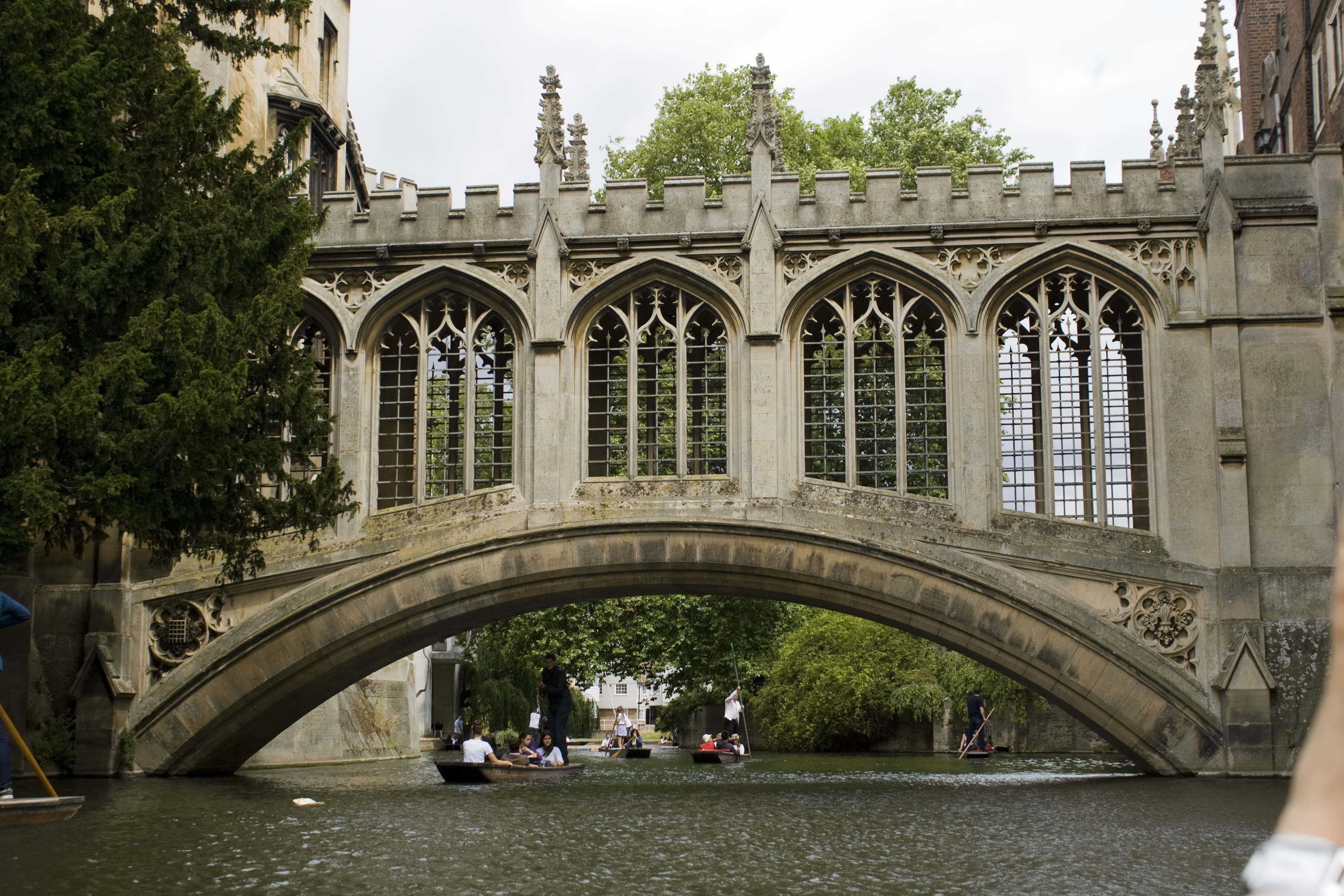
Lurched into all of this Cordelia gets employed on her first solo case to go up to Cambridge and investigate the death of a young uni dropout called Mark Callender. This involves all sorts of running around Cambridge, hard life for some.

It's a short book, so I don't want to give anything else away really. It was fun. It a proper British murder mystery. I felt like I should have been watching it as a BBC miniseries at times. It's dated well, besides the typewriters. At least I spent enough time as a kid playing with a typewriter I know about ribbons and how annoying they are. And despite the title, it was not even half as sexist as I expected it to be. That was rather refreshing, especially after the last couple of reads.

And best of all, I didn't pick the ending! I love murder mysteries when I don't work out then end.