Showing posts with label Historical Fiction. Show all posts

Thursday, 14 January 2016

The Coroner's Lunch

Image sourced from here
Dr Siri is ready to retire. He is 72, a doctor, who and also been a jungle fighter trying to bring about Communist change for years. Now the Communists are in power, and his loyalty will be rewarded with retirement, right? Hmmmm. Not so surprisingly he is "rewarded" by the Party by being appointed Chief Coroner (which he has no training for), and expected to work until he no longer can do so. And on top of that, working for a large amount of young men who don't have any understanding of their positions and are only appointed due to their Soviet university degrees.

Easily enough to drive you mental I would say. But not Dr Siri. He takes it all in his stride with a large amount of humour and sarcasm, and makes it a pleasure to read. We get pulled along with him through some of his investigations, that take him all over Laos and introduce us rather comprehensively to the situation of the 1976 newly Communist country.

The mysteries are good and not too obvious. There is an element of the fantastical/supernatural to the story which I was worried would be heavy handed and out of place, but works rather well. And there are just some great characters that I want to go back and visit again. Luckily there are another nine books for me to do exactly that.


Sunday, 4 October 2015

Crocodile on the Sandbank

Image sourced from here
I was a bit excited for this book. Archaeology. Mystery. Victorian era. Sassy, societal and gender role shunning protagonist. Sounded like a rip roaring adventure through pyramids with parasols.

However, all I wanted to do was smack Amelia Peabody and her smug little face with her smug little parasol. The woman was insufferable. I am all for smartarse, outspoken, sarcastic, pushing society's role for you, female protagonists. But don't give it to me coated in smug.

I struggled through the book. In fact I put it down as I thought I was in a reading slump, but now I have finished the book, I think the book was the slump. But I waded through to show myself she got better and it was a fun little cozy that everyone enjoys. Nope. I just saturated myself in the smug.

And don't even get me started on the most forced love interest. I can sort of see what was being attempted but it was "sneaking" up on you from page 20 like a four year old hiding behind a pot plant, and wasn't convincing at all.

Urgh. Now I feel like I need a shower again.


Saturday, 13 June 2015

A Beautiful Place to Die


Image sourced from here
I grew up like so many children of the 80s and 90s knowing about apartheid. I knew that in South Africa black and white people were separated, and black people were denied things, and rights, and opportunities that white people had. I also remember it ending, and Nelson Mandela becoming President, lots of happy people and dancing.

So I've always had the knowledge of apartheid. But I don't think I have ever really had an understanding of apartheid. I mean, it's pretty straightforward, right? White and black? I never considered the tiering between Afrikaans and English, or Jews, or Indians, or mixed race, etc. This book explores all of this and some. My 7 year old knowledge was blown out of the water and highlighted as what it obviously was, incredibly naive and simplistic. But until I had to really think about it, I really never realised how simplistic I assumed it was.

Detective Emmanuel Cooper is a white, English police officer. He is called out to a small town on the border with Mozambique. He arrives at the murder scene of the Afrikaan police captain, who seems to pretty much rule the town with his pack of sons. In an incredibly volatile situation already, Detective Cooper also has to work with officers from the country's Intelligence Agency who have taken over the investigation, while also enforcing the new apartheid policy and stamping out communism.

It's very well written. Both the story itself and the writing as a whole. I didn't think the story would be able to string itself out for the whole book, but she did it well. I thought I had the culprit picked early, but that got flipped on it's head, which I love. The writing of the landscape and the area was by someone who obviously loves the land, and made it sound incredibly beautiful, even in its barrenness.

She also handled the political landscape very well, I was impressed. There was obviously a point of view in the book, but it never felt heavy handed. I definitely would recommend, it's well worth the read.


Sunday, 1 June 2014

Fingersmith

Image sourced from here
Sarah Waters is a genius. A twisty, little genius. She has this ability to lead you along a story, where you are all comfortable with how it's going, and how it got there. But then she completely spins you around without warning. Everything you relied on is wrong, and yet makes complete sense just like the story you believed in the first place. And you feel so goddamn stupid that you never, ever saw it coming. But it's okay, you'll pay attention now, you've worked out her ruse. Then BAM! She does it again! And again and again... genius.

Fingersmith, from the three books I have read of hers so far, is the most adept at this. Possibly because the subject matter lends itself more easily to this. The book focuses on two characters playing a con on a rich, young woman in order to access her fortune. The list of characters feature con artists, forgers and petty thieves. It's a clever concept and one Waters executes fantastically.

What I will remark on though, is that compared to Affinity and Tipping the Velvet, the sense of place is not as developed in this book. In her other books I almost felt that London was a character in her books, but not so much this time. Mind you, with so much else going on, this may not have been such a bad thing.

I'm sorry for the vague review. I just feel like if I discuss the book in more depth I will accidentally spoil something for you. I also do feel like I have hit a bit of Sarah Waters fatigue. I tend not to read the same author in a row very often, or even the same genre back to back. And I have read 3 of her books in 6 months, 2 within one month, due to group reads and buddy reads that came up and I didn't want to turn the opportunity down. I wonder if I had read it later if it would have been a 5 star for me? All speculation, but still a brilliant read any way.


Tuesday, 29 April 2014

Affinity

Image sourced from here 
Sticking with the gothic theme for a bit. Affinity is a book I actually hadn't heard that much about. But after loving Tipping the Velvet so much last year, the last time I was at the secondhand bookshop I picked it up. Which was fortuitous as there were a few other Sarah Waters options, but this was the one chosen as a group read for April.

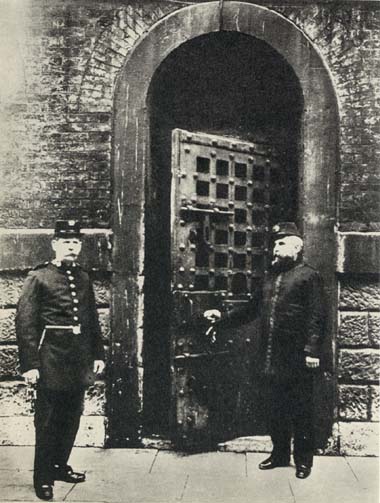
The book is another Victorian London historical fiction. We meet Margaret, the eldest, single sister in her family, as she starts her first day as a Lady Visitor to the infamous Millbank prison. Millbank is not a particularly nice place. At least by this stage, the worst prisoners in England were sent to another prison in London, but this was still not a nice place to end up at all.

Inside Millbank, Margaret meets a prisoner called Selina, who is a spiritualist. We all know how fascinated the Victorians were with the occult, spirits, magic and the like, so it isn't a surprise that Margaret is fascinated with Selina and her abilities, and ends up being drawn in deeper and deeper.

Right, so, we can all guess by now that I am a skeptic. In my experience these kind of people prey on people desperate for a message from someone they throw tells and information into the medium's lap. HOWEVER, the disclaimer for this book is that I wanted it to be all true for the story. I  am never one to let facts get in the way of a good story. Unless you swear to me something is a scientific fact and it is blatantly wrong. That pisses me off. Otherwise, I'm all for a bit of fun.

And while I wouldn't describe this book as fun, and while I couldn't completely disengage my disbelief this book drew me along quicker than I would have thought. And talk about a twisty ending!! I was hanging around 3 stars until I started hitting the twists. I didn't like it as much as Tipping the Velvet. I thought it may have been her first book, but looks like it was the second. And then it struck me, that was the problem with this book. It had a lot of second album syndrome to it. It wasn't bad, just felt a bit rushed and not quite as thought through as that debut.

A short review I know, but still a fun and surprising Victorian, gothic read.


Wednesday, 16 April 2014

The Shadow of the Wind - #51

Image sourced from here
I've been in a little bit of a reading rut lately. I'm not sure why, I just haven't really had the energy. I feel rather sad that I fell into it while reading this particular book. Luckily, this book threw me a rope or some other sort of laboured metaphor and helped me out of it. But I think unfortunately my opinion of this book suffered for it.

Don't get me wrong, I enjoyed this book immensely. Dark, gothic, mystery with hints of sordid pasts tied to civil war, mixed in with books, libraries and bookstores. All with a pinch of Spanish passion and melodrama behind it all.

We meet Daniel at 10 years old living in Barcelona. His Mum is dead and it's just him and his Dad. His Dad owns a bookshop that they live above. One night, Daniel's Dad takes him to an amazing library/depository called the Cemetery of Forgotten Books. Daniel can choose one book to take with him, as long as he does everything he can to protect the book while it's in his possession. He chooses the book The Shadow of the Wind and this choice embarks Daniel on a lifetime of obsession and discovery about the author and the book.

What I found confusing, that may be too strong a word, disorientating about the book was I kept on reading the dates, but the book itself kept on convincing me we were in a story set about 100 years earlier. 1850 say, instead of 1950. This was probably the gothic aspect to the storytelling honestly. But I was always a little surprised when they mentioned telephones or cars again. This was particularly so when at some stage in the book we visit a convalescent home. I felt I was back in Bedlam during it's not so pleasant heyday, not 1950s Spain. However, the book did make me brush up on my Spanish modern history, trying to work out who was who and who hated who and what not.

It was a great read. I think I missed some things with the 3 weeks it took for me to get through the first third of the book (yes, I took longer to read it and probably didn't pay attention. It's been that kind of month), but once I hit that point, the book took on a momentum of it's own. And I had to wake up and pay attention as I would get left behind, and also because I wanted to be swept along with it. The last third of the book was just constantly punctuated with "Oh my god!" or sharp intakes of breaths. Just when I thought it couldn't top itself, it would surprise me again.

This rating is an honest "it's not you, it's me" one. Maybe one day I will pick it up again and give it all the time, love and attention it so greatly deserves. I will definitely check out it's sequels though.


Thursday, 16 January 2014

The Luminaries

Image sourced from here
First of all, I need to thank Christina for giving me this book. Because, well, what a ride. I was not honestly going to go out of my way to read this. Yes it won the Booker, but long time readers of my reviews know that that could go either way for me. It makes me hesitant about the winners now. But with a heartfelt recommendation and a gifting, how could I say no? And with a Chunky book challenge this year, perfect timing.

The book is essentially looking at 12 main characters. They all live a West Coast New Zealand town, Hokitika, which is a gold rush town. People have moved around the world in the 1800s chasing gold, and settled in New Zealand. All of these men occupy different roles in this gold rush town and this book tells their story around a particular day. They recount this day to a 13th man. There are another 7 characters that influence and feature in this story. They are all described to you in a neat character table in the front as you would describe astrological entities. It sounds like a lot of people, but at over 800pp not really. If you get lost in the first part just flick back to this chart. I did and it fell back into place. But really, you get to know them all rather well.

This book is a work of art. I do not mean that in a trite saying way. I mean it is literally and intricately crafted and artistically thought through every step of the way. There is stuff I know I do not understand, and another reading may divulge that, but I think I wouldn't enjoy a second reading as much for reasons below. Particularly, the star charts used through out the book. I could work out who would be the main influences in the parts but not the intricacies. I understood that the moving of the stars through time of the different parts influenced the behaviours of the characters somewhat. In fact I could see how the stars influenced the characters, with them being sympathetic and trustworthy in the first part, but as their stars changed so did they, and you couldn't quite tell who to completely believe. It was clever, shifting suspicion to multiple people realistically. However, I didn't get a lot of the individual chapter names, in fact by the end I stopped reading them. But always read the chapter summaries.

I was describing the book to a few people the other day, both online and in real life. The book for me is like a spiral. Or a seashell. You start at the most outmost edge and you follow the ridge further and further in. This is what the book is like. You start at the periphery and get drawn further and further in, with more things exposed and revealed to you the closer you get to the centre. To begin with, it's true, it doesn't quite make sense. And they choose some of the most unsympathetic characters as your introduction. But the more you get in, the more you want to know. You get tighter and tighter towards the reasons, the truths and the characters and their motivations.

Honestly, I thought that she would drop all, if not some, of the balls. Everyone interacts with everyone in their own ways and their own stories. That's 20 factorial storylines! That's a hell of a lot of storylines. But she doesn't drop one! It's astounding.

I will admit I was wondering what the last few parts were about. Then there are more and more subtle reveals. Until the very last page...

This is, for me, an amazing novel. I am astounded how well constructed the whole thing is. And due to holidays, I devoured it. I would have been done days ago if it wasn't for stupid work. This well and truly surpasses all the other Bookers I have read. It actually deserves that damn prize. Read it. Read it now.


Tuesday, 7 January 2014

Year of Wonders

Image sourced from here
You can't describe this book. At all. It's one of those ones that just sounds incredibly boring. A small English town in 1666 realises they have an outbreak of the Plague and quarantine themselves off from the rest of the world, and 1/3 to 1/4 of them die. In fact my Mum described this to me a year or two ago and I thought the same thing. I did go and buy it though as we both have a Geraldine Brooks crush. And I am glad I did.

The thing is, I can't actually describe what I really liked about this book. The pacing and suspense (in parts) was great for a novel talking about something I thought would be boring. I thought I knew what the ending would be about, but I had no idea. That did seem a little left field, but not implausible at all.

This is a book that those who are wanting to use language styles in their historical novels should read. And emulate. The 17th Century language in how it was used, was not at all abrasive unlike other historical fictions I have read this year, and cleverly done. It was similar enough so we knew what was being said, but used enough to be different.

And it had just enough background that I could work out what was going on without feeling like I was being patronised. In fact it made me realise how little I know at all about the Puritans. Granted they are not in power any more in this book, but they are a lingering influence, and you can see the rector's struggle to keep the extreme views of the Puritans under control throughout their plight. I know they killed a king, brought in the only royalty free part in England's history, were so horrible at ruling (or their rules really) people went and found the rightful heir and begged him to come back and reinstate the royalty. Then the Puritans got a bit pissed at this and some of them buggered off and settled in the US. That is my TOTAL knowledge of them. I need to read some more about them. I prefer fiction with fact in there (I remember things better with a story), but happy for good non-fiction selections too so please recommend if people know any. And I need to dig out my list of historical witchcraft and witch trial books again.

Also, the book is based off a real town, Eyam, that did something incredibly similar to save those around it. That's pretty impressive. The author has used real names of people who she has replicated reasonable truthfully in her book. if she changed their character substantially or fictionalised them completely she changed their names. The plaque I have used as the image for this post shows the first cottage to be hit with the plague in reality, and you see that echoed in the book. It's done well and sensitively.

I just devoured it. Which I was surprised about as I wasn't a big fan of People of the Book. So if you like historical fiction (granted no battles if that is your thing), give this a go. It's short and sweet. And plaguey.


An Expert in Murder

Image sourced from here
Tell you what. Been definitely getting my murder mystery fix lately. I bought this on a whim. I needed an "X" book quickly. I couldn't find one anywhere, and then ended up in the bookshop at my work. I saw this. It was expensive (I hardly ever pay full Aussie retail for books. Why spend $30 on a new paperback when I can buy it online for $10 or less?) but I was borderline desperate. And I figured if I didn't like it, Mum probably would so it could be a present for her.

So I read it. It is set in the 1930s in London. A murder mystery writer and playwrite Josephine Tey is on her way down to London from Inverness on the train to see her play's last week in production on the West End. Some one gets murdered on the train. It all links back to her play. And then more murders happen. Everyone hates each other or is tied up in some way to another. It all seems too hard, but luckily Josephine and her detective friend who she bases her character off in her books, are there to save the day and catch the baddie.

I sound cynical. But it was cute. It's just such a well used plot now you can't really describe it without sounding cynical. It's a cozy. And we all know how cozies end. And they all sound a little lame when you describe them.

There was a lot of WWI flashbacks which was a little annoying. Not the ones central to the plot, just the whole "Everyone was so happy before the war" ones. Yes, I know. I'm a bad person.

I also had a real problem with the characters' sexuality. Well, obviously not a "problem" problem, as you would know from my other reviews. But everyone was so openly gay or bi. And I understand that it was more tolerated with women especially after the war, but you couldn't go around introducing them as your lover or snogging people on the street. You could and did get arrested for that. You could get locked up in prison or asylums for that as not only was homosexuality a crime, it was a documented mental illness until the 80s. That just didn't feel real to me.

And lastly, I felt we didn't have any of Phryne Fisher's sassy and sexiness of being a bit younger, or Miss Marple's playing everyone to think she's a dear little old lady-ness. Josephine was just a bit middling.

But over all, not an unpleasant book to read over Christmas. I saw the second in the series on sale next door to Lexx's work today where a discount book shop has opened up. Maybe when I run out of a few other reads...


Saturday, 14 December 2013

Tipping the Velvet

Image sourced from here
Ah this book. I have wanted to read this book for years and years, I finally thought about it at the right place at the right time (while in the bookshop instead of at home) and managed to pick myself up a copy. And over the last year of it sitting there, I've just  heard again and again how good a writer Sarah Waters is. So for an historical fiction challenge, I decided I should pick it up.

I watched the BBC miniseries of the book 10 years ago when I was much more naive. I had some friends who had taped it off tv and brought it around while I was housesitting. I turned down a date with Lexx (it was the first few weeks we started seeing each other) to sit at home with the girls and watch "a lesbian, Victorian, possibly bdsm, tv show". He offered to bring some wine and come along too (very selfless of him (piffle) but we had plenty though). But I had no idea what I was about to watch. Not so much bdsm, but I never knew the BBC made shows like that (far cry from The Bill for example). I've wanted to read the book ever since. Except the few times it came up that my Mum's friends loved it... that was a weird convo.

So with an history and a build up like that, it had to be good. And it was. It was mostly brilliant. I love historical fiction that you just engage with the characters and follow them unconditionally where they are going. I just abandoned a book as the language was so jarringly "I'm reminding you this is ye olde-y" it was horrible. Tipping the Velvet didn't do that at all. They used Victorian language but you didn't notice too much (a lot of the "quaint" words were still reasonably frequently used for me anyway), you just went with them on their journey.

Again, back to place. She is remarkable as well with this. yes, it helped I was walking some of these streets a few weeks before, but I was 130 years in the future. You could completely feel, smell, see the world or environment she was building. For me, this is so important in a book. I want characters I can believe, an interesting story and to feel like I am placed in that world. I know, I don't ask for much.

I did feel like the story started to drag a little once or twice, particularly in the last third of the book. It just needed a bit of editing. And I can't remember how different the ending was to the miniseries (to be fair we had probably drunk our 19 year old body weights in wine while we watched the whole 6 hours, so god knows if I remembered the ending the next day). But I liked the ending in the book. Who cares about the series, the book's what matters! That's what I'm meant to say, right?


Tuesday, 20 August 2013

Jonathan Strange & Mr Norrell

Image sourced from here
I finished this a few weeks ago. I had to digest it. In fact I started it on the plane to Thailand, but this thing is an absolute MAMMOTH of a book. And it does make sense as it tries to take on a incredibly large scope of things.

What the book is the story of two magicians, Jonathan Strange and Mr Norrell (didn't see *that* twist coming, did you!), trying to bring the art and practice of magic back to England. There are many theoretical magicians still around, but no one has managed to do a magic spell for hundreds of years. Well, until these guys pop along. This is quite an epic story in itself. Throw in an entire alternative history of England including it's folklore and myths, which involves magic and faeries being commonplace and integral to this history, and it turns into this tome. That the North and the South of England were different kingdoms, with the North ruled over by a magical king called the Raven King. And then there are all the other stories that tie in and out of the main plot.

It is a clever book. It reads like a Georgian, Industrial Revolution period book. It has the feel, the language and the tone. It's a bit of a shock when you remember it was only published 9 years ago. It's subtle and sarcastic. I found the sarcasm perfect in fact, I would read parts with a smug smirk on my face.

But it's so LONG. It's slow to start. I'm glad I gave it go number two on the plane over there, as I had nothing else to read (and I was NOT going to re-read Invisible Monsters) as I pushed through the first 200pp or so, and was really enjoying it when we landed and I was at page 400 or so. But then the middle of the book could have cut down a bit. Just a bit. I felt there was a bit too much same same at one point. The ending while pretty good, just I felt wasn't as epic as I deserved for investing myself in 1008pp. It was good, don't get me wrong, it was just... subtle.. again.

Overall I really enjoyed the book. I wanted to settle for a bit, to see what I thought after a few weeks. And I am the same. It was a 4 star book. I am glad I read it. I'm not annoyed I read over a thousand pages for what I got, as in the end I got a wonderful story about magic and magicians and alternate history and a wealth more of stories and lore to file away. And really, it confirmed that Yorkshire is an inherently magical place. That's worth reading a book for *wink*.


Thursday, 20 June 2013

The Garden of Evening Mists - #35

Image sourced from here
I'm going to do something in this post that I have noticed no one else who has done a "proper" review that I have read of this book has done. In fact, two things. By proper I mean reviews that have been published in old school places like literary reviews, and book sections of newspapers. I tend to read a book then have a quick look around the web for other peoples thoughts. Today's scout disappointed me.

So here it is.
1. I am not going to spoil the book. Unlike every review I have read, I am not going to give away a plot twist or the end of the book. Seriously. Who thinks that's a good idea?
2. I'm going to get my facts right. Most reviews I have read spout all these fact of what happens in the book. I just read it and they are wrong. Did they even bother reading the book? Or just the blurb on the back and some Goodreads or Amazon reviews? Bah.

After that build up. I really enjoyed it. REALLY! The book is the story of a Supreme Court judge in  Malaysia who retires (first chapter, not a spoiler). She heads up to a house she owns in the Cameron Highlands, and meets up with an old friend who still lives in the area. We then get told the story of her now, mixed with the stories of her past. We learn about the area, her history, the history of the country and about the Garden of Evening Mists.

What I loved about this book was the sereneness. The calmness. The stillness. I expected that when we were being walked through a beautiful, sculpted Japanese garden with Taoist, Buddhist and Shinto elements. What I didn't expect was it to trickle out of the garden and into the other elements of the book. Even the more violent or destructive parts of the book. I found that to be quite a skill.

I enjoyed the book also as it gave me a peek at the Pacific element of WWII. I am a bit over the European war stories. But this was a part of the war that we were directly a part of in some instances, but we talk very little about. And this was told from the perspective of not only the Malaysian Chinese, but the Japanese as well. Both of these are sides we never hear here in Aus. Then also, the aftermath of the war, with the instability of Malaya before it became Malaysia. I find it astounding we have so many Malays and Malaysian Chinese in Australia, yet we are taught nothing about their history, even the modern stuff. Sometimes I wonder if this is not more relevant than some European history. Mind you, didn't learn a lot of that either.

I definitely recommend this as a read. I enjoyed the journey the book took me on. I liked that there was another character in the book that was the garden itself. I am wondering how much gardening advice I can take out of this book to apply to my own overgrown, chaotic garden to instill into it some of the tranquility this book gave me.


Friday, 17 May 2013

From the Mouth of the Whale - #33

Image sourced from here
This book is beautifully written. It's lyrical. It picks you up and carries you along. You are swept through streams of consciousness and through herbal medicinal books, and then through third person narrative. You switch from one to the other seamlessly. It's a masterpiece in that regard.

But I am left with one overwhelming question.

What the fuck was that all about?

I mean I get it. It's the story of Jonás the Learned and his exile. It's about the amazing things he does or witnesses before he is accused of sorcery  It is about his weird magic realism visions. It's about his wonderfully patient wife. It's about him going to Denmark. But... what's the point?

I dislike getting to the end of the book and being thoroughly confused. It's the awkward break up conversation. "It's not you, it's me. I just don't think I can see this going any where." The book is as silent as my exes on the receiving end of the speech. Which could be a credit to my exes. But you just burble to fill in the space. In the end you just convince the other person they are better off without you or your understanding, because you have just revealed yourself as being slightly insane and they feel like they have dodged a bullet. "Why doesn't this girl just shut up?!?"

But I don't like that it my reading. The book that is cute and charming enough to get you to snog it while you're a little bit drunk, and then wake up thinking "What the hell did I just do? Please tell me it's not lying next to me." The book that tells your these epic sagas and then gets to the punchline and tells you "Oh I would tell you the point but it's too existential for you." (which is an "excuse" I was given by a staff member turning up 5 hours late for a shift (shifts were 4 hours long)).

See. This makes me grumpy. It conjures up images of break ups, drunken snogs with pretty, vapid boys and horrible prats who think they are all higher plain but are just fuckwits. It takes you on a pretty journey and I don't get the conclusion. If there is one. And I just don't know why I was taken on the journey.

I really do wonder if it is a cultural thing. Do I not get it coz I'm not Icelandic or even Scandinavian? I'd hope not but I may be right. I will read another of his books. I hope it is just this book, and it is the longest of them all. But I am prepared to be completely confused again. I'm not saying don't read it, just in case it is really me.


Sunday, 19 August 2012

Between Shades of Gray - #14

I am actually still reading Anna Karenina. But some of the lovely people who are doing the Around the World Challenge invited me to do their own 24 hour challenge for the weekend. It is all Olympic in theme, and therefore I am reading European books for Team Europe today. Also means no time for relevant pictures for my post.

I picked this up at the start which was midnight my time last night. I ripped through 8 chapters before bed. This quick amount of reading annoyed me. I hate the fact that people who are writing from young adults or children feel like that is an excuse to write badly. Or that if they write badly, then they change their audience to young adults and children. I think that is patronising. And not to mention I feel this must just turn off kids from reading. Thank you J.K. Rowling for cementing this trend (although she obviously didn't turn kids off reading but is a terrible writer).

And that's what I felt with the first 60pp of this book. However picking it up again this morning has made me change my mind somewhat. I couldn't for the life of me work out how we were going to see a happy ending to the book, or even an ending. I was pleasantly surprised that it was accomplished.

The story is of Lina, her brother and her mother who are Lithuanians who are taken from their homeland by the secret Soviet police/military and then are forced in to work camps and hard labour in Russia and Siberia. This occurs during WWII and you have this interesting insight again (like in Purge) of the people dealing with Stalin and hoping that Hitler will save them, only to realise that Hitler is just a monster from the West, as opposed to one from the East.

I feel so sorry for the people of Eastern Europe. They seem to have been forgotten by us in the West after we dealt with Hitler and the Japanese. As long as people were not attacking us and people like us (US, UK, Aus, France, Germany, Austria etc), we were kind of happy to leave them be behind their Iron Curtain. Where is seems that those people who fell on the wrong side of the curtain endured the horrible crimes that existed in the War for 40 years longer. That to me seems inexcusable...

But back to the book. It picked up pace, the flashbacks began to fit, and the writing  began to flow. Despite the few typos (what is with editors these days?) it was an enjoyable YA read. A great introduction to the horrors of the Soviet regime. Well great and enjoyable as it can be in the circumstances. 2.5 stars.


Monday, 28 May 2012

The Lacuna - #5

Straight up. I will make no apologies but I was brought up on musicals. 1950s musicals to be exact. According to my wonderful father, Frank Sinatra is the best singer, Fred Astaire is the best dancer, but Gene Kelly is just the best. This has nothing to do with this book, besides the fact that my mind thinks in musicals and finds links to any song possible. Which is helpful as a singer. However reading a book (as demonstrated in the last post) can be very annoying.

So, this book had Living Lacuna Loca in my head the entire time. While not Ricky Martin's fault, as it is not the actual title of the song, I am still annoyed.

That being said. That is where my usual "annoyance" ends.

This is a brilliant book. Not perfect but pretty damn close. I loved The Poisonwood Bible, and this is comparable.  Harrison's childhood and then young adulthood in Mexico was tangible. Parts of it made it feel like I could reach out and touch things. You respect Harrison and wish, no LONG, things to work out better for him.

You love Trotsky and Kahlo as secondary characters. Frida Kahlo was a big thing here in Canberra while I was in College (Yrs 11-12 for non-Canberrans). She had a exhibition here then, yes 50 years after her death,  and made a stir. One of my favourite Aussie bands mentions her in one of their songs of that time (also in my head the entire time).

Besides the brilliant first half of the book in Mexico, the rest of the book leaves me terrified in America. I'm not going go in to an anti-American diatribe. But the the last half of the book, with it's anti-Communist-for-the-sake-of-it focus is heart breaking. Not the author's point of view but the society's.

I have never ever though about post war America. My father mentioned above was a kid when the war hit. He lived in England, in the North, and he met so men who trained up North and were fed at his Grandmother's house and went to war. He was a sailor in Korea and Vietnam and trained in the States, but you could not get him to say a nice thing about the States in WWII. To them and him, America only came in when they themselves were threatened.

I am not going to argue with anyone here. My father is gone so I can't convince him otherwise. My point is as an Australian with a Yorkshireman as a father who lived through the war, I never though about America post war. It just happened, and then there was Mad Men. But this book explained, if it was close to what happened, the American psyche. It explained to me the terror, the void of identity, that needed to be plugged. It if nothing else explained to me the blatant fear of socialism and communism that exists in the country today.

I don't need a political debate and that is not what I am after. However, when a President for example looks at introducing something the rest of the Western world has and is labelled a Communist or/and a Socialist, the end of this book explains why that is so for the rest of us who cannot fathom it. Too us it is madness, this book explains where madness comes from.

It was amazing, liberating, for a borderline socialist, invigorating, historically balanced, and just bloody well written. I may have a girl crush. I also crave enchiladas. So 4.5 controversial stars from me.


Next: The Elegance of the Hedgehog in France