I don't know what to think of this book. It's a conundrum.
It is brilliantly written. Hands down, no arguments at all. It is immersive and, just, well... beautiful. I was sitting on my back steps the other day in the blazing Canberra spring (spring can be blazing here, trust me). I was leaning up against the brick wall, sitting on the concrete, with a view of the Brindabella mountains and a gin and tonic as it was so warm, with magpies singing and cockatoos squarking around me. But for the first time I could remember in a very long time, I was so sucked into the writing I felt like I was in a dingy Muscovite hotel, in winter in 1870 or so. The only thing that brought me back was a chicken jumping into my lap. I was astounded, once I had recovered from my confusion and slight shock from a big black chook snuggling into me.
Because of this, I wanted to keep on reading. But I wanted to keep on reading something worth reading. Tolstoy reminds me of a brilliant painter, who only paints still life. While the technique and result is breathtaking, you can't help get over the fact they have only painted a bowl of fruit. Over and over again.
Now don't get me wrong, some of the characters Tolstoy creates are fantastic. I shouldn't of loved Oblonsky but I did. I thought he was wonderful. I liked Anna right until the end. Then she went all weird. Even Vronsky I grew to like, although I didn't find him attractive (too many moustaches and bald spots for me).
But the story... You do want to know what happens to Anna and whether she gets everything to work or not (although Russian novel should indicate that to you at the start). But if I hear one more thing about hunting or farming I think I will scream. I know that Tolstoy had all these great ideas and that this was how gentleman passed them on to the masses if they couldn't write an interesting essay. Whack a story around your philosophy! But sometimes I think he was trying to be too clever (like the 3 pages inside the mind of the dog. Slightly left field...) or too preachy (the entire last part with Levin).
However, his ability to completely convey what is happening inside peoples' minds is pretty remarkable. Anna's ... how to say this non-spoilery... "journey" at the end of the book while perfectly conveys that way of thinking, however a little too well as I just wanted to shake her and yell "Pull yourself together woman!!" I didn't like her at the end of the book. But I think because she was so real and believable and there is a reason I am not a practising psych.
There was much that I missed with this book, which is fair enough really at over 800pp. Watching this episode of the First Tuesday Book Club again after finishing the book highlighted this (sorry I can't find a youtube link to this one). Thank you Richard Flanagan for explaining the doctor in Kitty's bedroom scene in a way my mind never went to. Makes complete sense, that the doctor may have been, umhum... "servicing" her, in 1870 or there abouts, I just never made the leap (the man has read the book too many times, or enough times I guess).
Back to my conundrum. I didn't love the story, so I want to give it a 3. But I loved the writing, so I want to give it a 4. But 3.5, doesn't sit well with me. But it is the diplomatic thing to do. Also, it looks like the movie has cut out Levin and Kitty completely. I was wondering how they were going to make it 2.5 hours long. Anyway, compromising with 3.5 horrible Jude Law moustaches.
Showing posts with label Alcohol. Show all posts
Monday, 3 December 2012
Sunday, 11 November 2012
In the Time of Butterflies - #21
I got distracted again by life. It really needs to stop getting in the way like that. Last book that was half read on the plane and half in a jet-lagged state was In the Time of Butterflies. This poor book got a bit more love than I would like, as I'm pretty meticulous with my books, as I had a mother of a cold on the plane and sneezed, causing me to wave my hands in the air like a numpty, which then collected my G&T and doused my lap and my book in too much tonic and not enough gin. At least I missed the two unfortunate women sitting next to me...
Besides the wiggly and alcoholic state of the book, I actually liked the book. I am hesitant when there are a few narrators and they they use diaries to describe their life events etc. But this book balances it beautifully. It has first person narration, scribbles in personal diaries as well as third person observations about the
....
This post was briefly interrupted by the fact that I tried to shift my weight on my computer chair by leaning on one arm and moving my body. At this stage all the screws holding the chair to the frame fell out on the left hand side of the chair, propelling me over the right hand arm rest I was leaning on and landing on my head on the floor. I have now spent 10 minutes finding the appropriate allen key to screw in all the screws again and am back in business.
....
dictatorship of the Dominican Republic under Trujillo, and the story of the 4 Mirabel sisters and their attempts through the Underground, where they were collectively known as the Las Mariposas (the butterflies), to overthrow him.
Who am I kidding? I am not going to recover this post!
Good book, well written, nice introduction albeit fictionally into the world of dictatorships in Central America.
Besides the wiggly and alcoholic state of the book, I actually liked the book. I am hesitant when there are a few narrators and they they use diaries to describe their life events etc. But this book balances it beautifully. It has first person narration, scribbles in personal diaries as well as third person observations about the
....
This post was briefly interrupted by the fact that I tried to shift my weight on my computer chair by leaning on one arm and moving my body. At this stage all the screws holding the chair to the frame fell out on the left hand side of the chair, propelling me over the right hand arm rest I was leaning on and landing on my head on the floor. I have now spent 10 minutes finding the appropriate allen key to screw in all the screws again and am back in business.
....
dictatorship of the Dominican Republic under Trujillo, and the story of the 4 Mirabel sisters and their attempts through the Underground, where they were collectively known as the Las Mariposas (the butterflies), to overthrow him.
Who am I kidding? I am not going to recover this post!
Good book, well written, nice introduction albeit fictionally into the world of dictatorships in Central America.
Friday, 2 November 2012
An African In Greenland - #18
I loved the thought of this book when I heard about it. The
idea that a young African boy learns about a place like Greenland and then runs
off to live there. It’s so ridiculous and yet so fantastical.
That’s the story of Michel. He grew up with his father’s
family on the coast of Togo and starts with a lovely whimsical illustration of
his life there, starting with an encounter with a snake up a coconut tree.
There was something so jovial and carefree about the stories of him in Africa,
first in Togo and then as he journeys to Greenland, through the entire
north-west of Africa earning money, in to Europe and beyond.
The thing that starts being apparent during this journey is
that Michel is a very privileged African boy. He has been schooled and knows a
couple of languages (benefit of Togo being an ex-French colony of course). But
this seems to have made his transition through Europe and ability to get jobs
much easier. Lucky him of course, but it
starts to draw away from his “typical” African boy image.
I really liked the book and was recommending it to everyone,
until I got to Greenland.
Now the book wasn't bad from Greenland on. However it began
to take on this air of condescending judgement. Michel wasn't happy with the
people he found in Greenland. He didn't approve of their lifestyle all that much.
He had an idealised idea of what Intuits should be, without much knowledge of
the background of the area (Denmark colonised Greenland and was very big on
getting the Intuit’s to give up their traditional way of doing things, but
without much consideration to what they should be doing instead). As like most
people with uninformed, idealised points of view, he was a little disappointed.
And not to mention
had a huge heap of double standards. Alcohol and promiscuity wasn't his thing.
Unless he was doing it. He even goes on to mention that he is happy to sleep
around, but not happy when it’s “his” girl who does it. I am not sure if this
is a result of his home polygamous culture, a result of being a product of the
1950s-1970s or just being a misogynist.
Otherwise it was a good introduction into the ways of the
Greenlandic community, their culture and their activities. There is a lot of
blood and slaughtering in this book. If you don’t like the thought of people
eating meat or whale blubber raw, this probably isn't for you. But if you get
over that slight turn of your stomach when he describes his meals there is a
lot to learn.
I did enjoy it, don’t misunderstand me. I just am frustrated
that a book that started out so well fell into the trap of the usual judgement
of other cultures. “It’s not what I expected and therefore it’s not the right
way to act”. And hypocrisy always annoys me. So it’s not one I’ll be running
out and telling everyone to read any more. But it’s still worth a good 3 stars.

Monday, 11 June 2012
Devil-Devil - #8
This. This book was perfect for Singapore. I couldn't quite get my head into a space with Norwegian Wood, where I could imagine snow. What I needed after that, was somewhere where there was 28C temp and 85% humidity like Singapore. This book filled it. So what about it?
Straight up.
This book had 1 major error that I had problems getting past. It just SCREAMED(!) outsider (it was written by a Brit who had lived in the Solomons). All these intelligent islanders, were sent to Australia for an education. If, and I understand they were in the 60s, they had the unfortunate experience of drinking XXXX, they would know to spell it XXXX. As an Aussie, you spell it XXXX.
Not, definitely not, 4X.
The whole joke is "Why is spelt XXXX? Because Queenslanders can't spell Beer!".
Bah.
So with all that aside. Murder mystery. Traditional culture vs colonial culture clash. Hiking around the bush in the heat and the humidity. The fact that there were too many fallible characters that any one of them could be the killer. Grumpy, precocious nun.
You like the main character Ben Kella. He is straddling a world that is drastically changing, which he knows and has to balance them both. He is the traditional peace keeper of his traditional culture, yet a policeman of the new world order. You respect him and empathise with him.
Same with Nun-face (yes I called her nun-face. I call everyone whats-his-face if I don't know their name and I have no idea how to pronounce the rest of her South American name, so nun-face will have to do). You respect her for what she is doing and where she is. Also, as much of me resents it, in the 1960s it was probably the most amount of independence she was going to get (as a woman, to become a nun and end up in the Pacific).
Best read ever? No. But fun read? Yes. Nice murder mystery? Yes. Nice Pacific Island read? Yup. Read it. It gives you perspective, and education (it comes with a map inside! Bonus!) and I think shines light on a place that hasn't got that much light shining on it (what is it with the lack of Pacific fiction? Seriously?). 4 stars.
Next: Denmark with Miss Smilla's Feeling for Snow
Straight up.
This book had 1 major error that I had problems getting past. It just SCREAMED(!) outsider (it was written by a Brit who had lived in the Solomons). All these intelligent islanders, were sent to Australia for an education. If, and I understand they were in the 60s, they had the unfortunate experience of drinking XXXX, they would know to spell it XXXX. As an Aussie, you spell it XXXX.
Not, definitely not, 4X.
The whole joke is "Why is spelt XXXX? Because Queenslanders can't spell Beer!".
Bah.
So with all that aside. Murder mystery. Traditional culture vs colonial culture clash. Hiking around the bush in the heat and the humidity. The fact that there were too many fallible characters that any one of them could be the killer. Grumpy, precocious nun.
You like the main character Ben Kella. He is straddling a world that is drastically changing, which he knows and has to balance them both. He is the traditional peace keeper of his traditional culture, yet a policeman of the new world order. You respect him and empathise with him.
Same with Nun-face (yes I called her nun-face. I call everyone whats-his-face if I don't know their name and I have no idea how to pronounce the rest of her South American name, so nun-face will have to do). You respect her for what she is doing and where she is. Also, as much of me resents it, in the 1960s it was probably the most amount of independence she was going to get (as a woman, to become a nun and end up in the Pacific).
Best read ever? No. But fun read? Yes. Nice murder mystery? Yes. Nice Pacific Island read? Yup. Read it. It gives you perspective, and education (it comes with a map inside! Bonus!) and I think shines light on a place that hasn't got that much light shining on it (what is it with the lack of Pacific fiction? Seriously?). 4 stars.
Next: Denmark with Miss Smilla's Feeling for Snow
Sunday, 10 June 2012
Norwegian Wood - #7
I wasn't expecting this book. I again have heard wonderful things about it. But I am going to plead something that I hate doing, but I think I was an ethnocentric Westerner. I think I combined Haruki Murakami and Kazuo Ishiguro, both of which I wish to read and have it seems slightly fantastical, futuristic and almost sci fi elements in their fiction. But that wasn't Norwegian Wood.
Norwegian Wood is named, thank goodness, after the Beatles song. That would have driven me mad otherwise. It is set at the turn of the 60s and 70s, with Toru Wanatabe heading to University in Tokyo and learning about himself and in turn love. However his learning about love is long, and more complicated than you could really imagine.
I guess that is the benefit of fiction at times. You can have these characters experiencing things that seem so far fetched, in a way so you don't have to. Or so you can work through your own response to those scenarios just in case they ever eventuate for you. But you feel for Wanatabe. You wish for him to fall for a normal and uncomplicated woman. Although part of you wonders if he falls for incredibly complicated women as he is borderline boring himself.
I will say however, that this is not a book to read if you do not want graphic sexual descriptions. And it does make it uncomfortable to read on the Tube/Metro/SMRT system in Singapore as in our heads at least, it is considered a very conservative place. Surrounded by headscarfs and people who at least (yes, see above, judgey Westerner, I hate it) look like they are Hindu or Muslim it makes it hard to read passages about noises made during sex. Although there were other times when there were many teenagers (either Chinese, Malay, Indian, or European) in tiny clothes rubbing up against each other in those trains.... Point is Singapore is complex, and it made this book uncomfortable at times. But that was my own issues... Maybe don't take it to read in the Middle East.
But in summary, beautifully written. I think I could have hated the story and still loved the book. Looking forward to reading more of this author. Loved that it was set in Tokyo as I have spent a few days there and could imagine quiet vividly some of the settings.
I did want to drink Midori while reading it due to Midori's name in the book (which simply means "green" in Japanese), but even better was we had bought some Choya plum wine duty free (well the expensive stuff, but this is what we drink at home) and spent a few nights after coming in from the sweaty crowds and bustling markets to sitting reading this book and some ice cold, Japanese plum wine (if you haven't tried this stuff, you *have* to). Perfect, or in one of my few Japanese phrases: totemo oishii desu. 4 stars.
Next: Solomon Islands with Devil-Devil
Norwegian Wood is named, thank goodness, after the Beatles song. That would have driven me mad otherwise. It is set at the turn of the 60s and 70s, with Toru Wanatabe heading to University in Tokyo and learning about himself and in turn love. However his learning about love is long, and more complicated than you could really imagine.
I guess that is the benefit of fiction at times. You can have these characters experiencing things that seem so far fetched, in a way so you don't have to. Or so you can work through your own response to those scenarios just in case they ever eventuate for you. But you feel for Wanatabe. You wish for him to fall for a normal and uncomplicated woman. Although part of you wonders if he falls for incredibly complicated women as he is borderline boring himself.
I will say however, that this is not a book to read if you do not want graphic sexual descriptions. And it does make it uncomfortable to read on the Tube/Metro/SMRT system in Singapore as in our heads at least, it is considered a very conservative place. Surrounded by headscarfs and people who at least (yes, see above, judgey Westerner, I hate it) look like they are Hindu or Muslim it makes it hard to read passages about noises made during sex. Although there were other times when there were many teenagers (either Chinese, Malay, Indian, or European) in tiny clothes rubbing up against each other in those trains.... Point is Singapore is complex, and it made this book uncomfortable at times. But that was my own issues... Maybe don't take it to read in the Middle East.
But in summary, beautifully written. I think I could have hated the story and still loved the book. Looking forward to reading more of this author. Loved that it was set in Tokyo as I have spent a few days there and could imagine quiet vividly some of the settings.
I did want to drink Midori while reading it due to Midori's name in the book (which simply means "green" in Japanese), but even better was we had bought some Choya plum wine duty free (well the expensive stuff, but this is what we drink at home) and spent a few nights after coming in from the sweaty crowds and bustling markets to sitting reading this book and some ice cold, Japanese plum wine (if you haven't tried this stuff, you *have* to). Perfect, or in one of my few Japanese phrases: totemo oishii desu. 4 stars.
Next: Solomon Islands with Devil-Devil
Saturday, 23 July 2011
Weekend
Not much to do this weekend. Yum cha tomorrow which will be delicious. Otherwise I think I will spend the afternoons reading The Graveyard Book by Neil Gaiman, playing some WoW and drinking more of our the latest discovery, known around our house as Wood Fairy Juice:
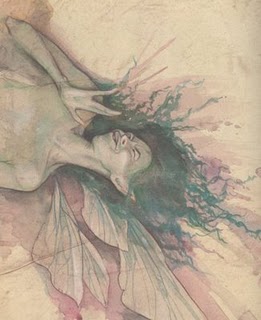
It tastes like these guys (from Lady Cottington's Pressed Fairies Book):

EDIT: To fit with the Fairy theme, we sat around for an hour to witness the Easter Egg in the Trisfal Glades of Fey Dragons dancing around a mushroom ring and a beautiful piece of music.
It tastes like these guys (from Lady Cottington's Pressed Fairies Book):

EDIT: To fit with the Fairy theme, we sat around for an hour to witness the Easter Egg in the Trisfal Glades of Fey Dragons dancing around a mushroom ring and a beautiful piece of music.
Subscribe to:
Posts (Atom)