Wednesday, 8 October 2014

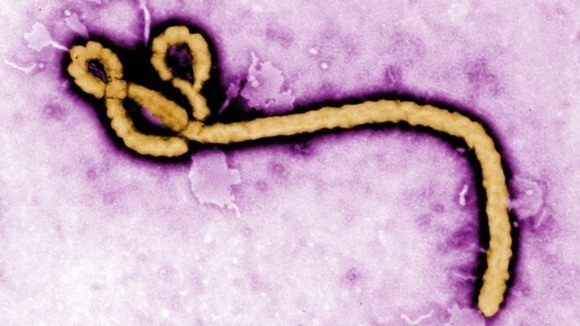
The Hot Zone

Image sourced from here
Things I have learnt while reading this book:

  • Telling you random things about people you are introducing in the book will "make people like them more" (I reckon he got that out of a creative writing class) and also builds up tension. Tension to the point of nauseating boredom. I think if I didn't hear about what kind of animal the intern likes hunting on the weekend, or what song someone's parrot at home likes to sing, the book would be a good 100pp shorter.
  • Oh, and we need the word "intern" explained to us.
  • I also need to have the concept of an Army "mission" explained. "So when the Army decides it wants to do something, it's called a mission. And the mission has a leader. That leader is called a..." oh god kill me now.
  • Women are supposed to clean up after Thanksgiving.
  • When the author discovers a phrase he likes and thinks it is funny, he will use it over and over again, even in inappropriate places.
  • When the author thinks his terminology is better than the facts, he'll tell you what the fact is, but that he's just going to keep on calling it his word. Coz. Who needs facts?
  • Apparently the author doesn't need facts. As I have now discovered that his account of Ebola is incredibly hyped up, exaggerated and borderline fanciful. Who needs facts when you can have people exploding into puddles of blood! What a waste of my time as that's why I was reading a "non-fiction" book on the subject.
  • Stephen King is an idiot if he thinks this is the "One of the most horrifying things I have ever read."

I'm angry. I'm angry and ranty. I feel mislead, manipulated. I was happy to accept that this guy wrote the book 20 years ago, and science hasn't been overly kind to this book. We've learn heaps and it does date the book somewhat. That's fair enough, and also exciting! Look at how much we have learnt and advanced in 20 years!

But then, I found out that he is known to have exaggerated not only the effects of the disease, but the specific "outbreak" of Ebola he is recounting in the book. Why is this book marketed as non-fiction? It is almost negligent in it's aim to induce panic around Ebola.

Do not get me wrong. Ebola is terrifying. It should be contained and treated quickly where it starts, and if we in the Western sphere didn't have our heads so far up our own arses we could have stopped it from getting so big at this point in time. I do not want it, I do not want any one I have ever met to catch it, and I am horrified it's spreading to other continents this week.

HOWEVER, the bastard virus is terrifying enough, it doesn't need some dickhead wanting to sell books to make it sound like if you catch it you turn into the Wicked Witch of the West. I do not want "true" accounts of "real" events packaged to me like a bad American tv drama. Give me the facts, write them in an engaging and interesting way. You'll still sell books. Just maybe not as many to 14 year olds.

Look, to be fair, I knew nothing about filoviruses. I had never heard of Marburg. I now have and it has made a lot more sense now when I've reading articles about Ebola in the news. But I am now questioning everything I have learnt through reading this book as I cannot trust this "knowledge". I've got the shits as even though it was an easy and accessible read, I cannot stand people lying to me about fucking science. There is one area we do not need any more misinformation and ignorance at the moment and that is in all our sciences. Our science literacy at the moment is dropping at an alarming rate, and books like this are not going to help.

Bah. Angry and Ranty.



Monday, 6 October 2014

Hexed

Image sourced from here
I don't tend to read series all in one go. Or even the same author in a row. So to read this one so close to the first book, I was expecting trouble. Mainly I was expecting to be proven earth shatteringly wrong about the first book. In truth, I was worried reading number two so close to the first would make me realise I was completely wrong and the whole series was complete crap.

I was so relieved to find this book was everything I loved about the first one. Atticus is sarcastic and snippy. Oberon is hilarious in his dog like way. The crazy old Irish lady is still crazy as. Bacchus worshipping hot ladies from Vegas. Polish witches. Insane German witches cavorting with demons.

There is honestly not much more that I can say. It's not a one hit wonder as I feared. I can't wait to read the next one, but making myself slow down so I don't burn myself out. But I really, really, really want to read the next one!


Tuesday, 30 September 2014

Wuthering Heights

Image sourced from here
Well. That's done. I've been meaning to read Wuthering Heights for years. It's a "Classic" (so along with that goes all the cultural references I have never really got). The Brontes are hailed in some circles as better than Austen. It's the most romantic story ever written.

Let me address those assertions. Bullshit.

Wuthering Heights is a book about the most stubborn, sullen, sulky, self-centred, selfish (I've unintentionally gone to alliteration and I have now run out of s words), prideful, petulant, bad tempered, greedy, hypocritical individuals I have ever had the displeasure of reading all shoved into one book.

I'm at a loss of why the book has been taught in high schools around the world for years. The story isn't particularly interesting or complex. The writing and language is easy to read and understand, which possibly makes it a more accessible option. Some people may have problems with the dialect parts, but to me that was just a Yorkshire accent. I actually stopped reading it as although I could understand it, it did take a bit of brain power to switch in and out of it and most of what Joseph said was rubbish anyway. Is it taught with the lesson "all these characters are who you should not grow up into"? Because that would make sense, a warning not to be like them.

This is a book of abuse. Really, that's what it comes down to. Severe manipulation of people, with liberal sprinklings of physical, emotional, psychological, and no doubt in my mind in the background, sexual abuse. Now I am far from being a prude or easily offended. I have read many a book that deal with these issues and themes. But in most other books there is a story that turns those situations into plot devices. Wuthering Heights doesn't have this. It is a chronicle of how people wish to control and/or destroy other people, mainly for the sake of it. It left me feeling a bit off in places.

And for the romance. There was hardly anything. There was fighting, sulking, screaming, name calling, shunning but not romance. I knew beforehand that Heathcliff and Cathy were supposed to love each other, but I would have found it hard to see if I didn't have that context. Life is too short to have a relationship like theirs, and it definitely is too short to read about it.

Positives? Well, as I said it was easy to read for a classic. That's good. I will now understand cultural references made about Wuthering Heights, so I can appear more intelligent in very certain conversations. And the moors. Can't go wrong with the moors. I can frolic over the moors myself and leave Cathy and Heathcliff behind.


Saturday, 20 September 2014

The Secret History

Image sourced from here
What self-respecting book starts with the main character confessing a murder on the first page? I mean, that's not how books work. You may have a body in the first chapter or so, but you don't have a confession. That's crazy talk. How do you then draw the book out for 600pp?

This is where Donna Tartt turns into the amazing author I have heard about. She then works from what would usually be the climax of the book, and gradually builds the tension throughout the book. I felt like a tightly wound spring by the end. She piles on anxiety after anxiety with the characters and you don't really realise you have absorbed every single one until it releases. It's exceptionally clever writing.

That's one of my criticisms though. It knows it's clever. It oozes clever. It didn't bother me too much as I personally felt it backed most of it up (although crash courses in ancient Greek history kinda gets me going). But even I felt like it was self indulgent every now and then. I can see this would piss some people off.

Also. I found it incredibly unbelievable how incredibly "likeable" some of the characters were. I am sorry, but they weren't. They were dicks. And the fact you have to tell me over and over again how much people actually liked so and so, backs up my point more than yours. Don't tell me for a page how ridiculously sexist, racist, homophobic, leeching and parasitic someone is and then say "but everyone liked him" repeatedly. No. I bet a lot of people didn't like him. And I bet a lot of them were wondering like me why everyone was so worried and invested in him. Bah. Just wasn't overly believeable. Small part of the story, but enough to irk.

These things aside, I really enjoyed the read. I like books I can't predict. I like reasonably clever books (even when they slightly think they are cleverer than they are). If you haven't read Donna Tartt before, I would recommend her. I am keen to read her other books.


Tuesday, 9 September 2014

Hounded

Image sourced from here
I have found my catnip.

My nearest and dearest will remember when I dreamt of running off to Cambridge and doing the incredibly useless but oh so interesting Bachelor of Anglo-Saxon, Norse and Celtic Studies. Imagine that, with a sprinkling of my Greek and Roman classics classes, a dash of my Religion and Ritual in India anthropology course, a liberal dose of my many years of bible studies, Christian and Catholic upbringings and education, and the first year Religion course in Christianity, Judaism and Islam. Add on top of that a hot, Irish druid, a "talking" Irish wolfhound, a slightly sarcastic tone, and an inability to take itself seriously.

See. Catnip.

The book introduces us to Atticus O'Sullivan. He is a 2100 year old druid who is living in Phoenix, Arizona. He runs an occult bookshop and cafe, and likes fish and chips at the Irish pub down the road. He's hanging out there because after running around the world for many centuries, he's settled in the furthest place he can find from the Irish god he annoyed several centuries ago. But as all these things go, that doesn't last for long.

The book cannot be taken seriously. I've read complaints from people saying it was silly and they were disappointed at that fact. Why on earth would you get grumpy at that?  I can understand picking up a book about a druid who's lived for millennia and is hiding out in America, interacting with gods and goddesses and faey and witches and anything else that comes through his door, and thinking it was a serious piece of literature (actually, I can't in case you missed the sarcasm). But if you did, I am pretty sure you would notice early and could adjust your expectations to enjoy it.

It's fluff. It is incredibly enjoyable, laugh out loud funny, fluff. The mythology I know is pretty well researched though. Even the Slavic stuff (Zoryas this time, unfortunately no Rusalka). So you know, you could learn something in it as well. But if people want to waste their time getting grumpy, then far be it from me to stop them. However. I think you should read it and I think you should enjoy it for being silly. I know I am, I've already bought the next 4 in the series.


Wednesday, 3 September 2014

The Wind-Up Bird Chronicle

Image sourced from here
I just spent 20 mins trying to explain what happens in this book. I can't. It sounds wooden, repetitive. This happens, then this, then this. In fact, a lot happens in this book. So many things. Finding cats, soldier's stories of war in China, Mongolia and Siberia, marriage break ups, psychics and spiritual healers, wells, 16 year olds in bikinis, wind-up birds, wigs. This book is 600 pages of the inexplicable.

In fact, I found myself halfway through the book and having no clue of what was going on, and where we were going. But I didn't care. Murakami is such a beautiful and lyrical storyteller I was happy for him to keep on taking me. I wasn't worried if I found myself at the end of the book and had no understanding of what had occurred, as the journey you were taken on was enough.

Luckily for me, I felt things got wrapped up at the end. I felt, unlike a few other reviews I have read, that I understood what had happened and that all the loose threads had been gathered together in an ending. Which is great, because I didn't have high hopes for the ending. I had heard that Murakami is not known for great endings. So I was pleasantly surprised. The other thing I have heard again and again about him, is his not particularly great sex scenes. I am not sure if that is a problem of translation, or if they are known in the Japanese as being oddly written as well. I think I had read one of his in the past that had been nominated for the Bad Sex award which was particularly appalling. So again, I was prepared for the worst and it was just normal bad, not terribly bad. Sex scenes are just hard to write well I have decided.

But these small hesitations aside, and then after dealing with my realisation of been lost, albeit pleasantly lost, in the book, it was another wonderful Murakami experience. I am glad I enjoyed one of his more fantastical books as much as his more realistic Norwegian Wood (seeing I have another four of his books on my shelf). I can see him cementing himself on to my favourites list.


Monday, 25 August 2014

Home again.


And that's my last book on the original list I made for my Around the World trip. I read 54 books, well 51 read cover to cover and abandoned 3. I visited 53 countries around every continent, besides Antarctica. According to my little map on my list page, I have visited 26% of the countries in the world. Kind of throws it into perspective really when you realise that you have only visited a quarter of the countries, let alone scratched the surface of all the different cultures in the world.

Some of these books I have loved with every part of me, and suffered huge book hangovers after finishing. Others have been thrown across the room in disgust. One has even been turned into Christmas decorations as I decided it didn't deserve to be a book anymore. I have worked in a hospital in Ethiopia, visited another planet where the dominant culture is Caribbean, gone whale hunting in 1920s in the Faroe Islands, lived with an exile in Iceland in 1635, got involved in the most insane hockey game I have ever heard of with a family of Maoris, and solved murders in medieval Italy, 1970s Solomon Islands and modern day Denmark and Greenland, just to name a few of my adventures. I have also learnt I am not very tolerant of self-indulgent, old men who think they are incredibly smart or attractive or both, no matter what culture they come from. Particularly when they are neither.

Was it all worthwhile? Overwhelmingly yes. I do believe this is something that everyone should do. Maybe not 52 books at one go (who am I kidding, I got side tracked all over the place, including with other around the world books not on this list. That's why it's taken me 2.5years). Maybe in chunks of 5 or as you feel like it or one every few months. But we need to challenge ourselves to expose ourselves to different ways of telling stories and different styles and genres. But also it's a wonderful way of learning about different cultures, religions, political systems, even languages. And as literature helps you empathise and understand, I think this would do wonders for helping us to understand and empathise with other cultures in the real world.

Australia particularly, as much as we say we are a multicultural society, we are very sheltered in our exposure to other cultures that aren't within our own society and our own constructs.We should be encouraging everyone to read books from outside our own Anglo way of viewing things (including wanting nice, tight, wrapped up endings. Apparently that doesn't happen much in other cultures' writings), and to blow our minds a little. The world is so huge, and the least we can do is explore it from our armchair. I'll definitely be continuing my travels, so come join me.