Showing posts with label Recommendations. Show all posts

Monday, 28 September 2015

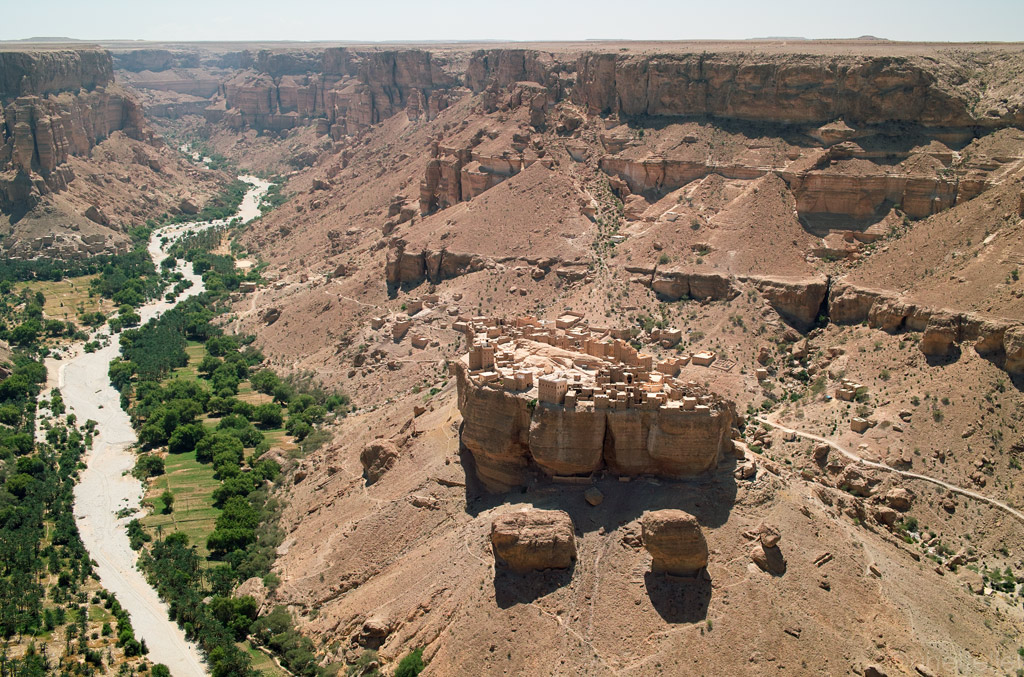
Salmon Fishing in the Yemen

Image sourced from here
My Dad read a lot. But he read things you could learn stuff from (gardening, wildlife, natural history, woodworking, diy, history, military, politics, etc books) or biographies/autobiographies of sportsmen or military persons. So much so that when he passed away and my Mum came with us to his flat, she remarked that copy of The Bourne Identity was the first novel she had ever seen in his possession. And she had been married to the man for 15 years at one time.

So that being said, the only novel my Dad ever recommended to me to read was this one. From what I can piece together, I think he had borrowed it from the library as he thought it actually was a book about fishing in the Yemen. It wasn't, and isn't, but Dad being Dad, seeing it was in his house for a month, he'd give it a go. And apparently he loved it.

I can honestly see why. It's the British kind of absurd he loved. It pays the crap out of those ridiculous people in London doing ridiculous things that his kind of Northerner doesn't get, and really, I only do as I live in the bureaucratic capital of another country. It's Yes Minister, but with fish and the Middle East. It is bloody funny.

It's a tongue in cheek look at the most boring man in British history who has been commissioned against his will through his civil service job to see if salmon fishing in the Yemen is possible. The book then follows him and his colleagues through the project and it's misadventures, and how it changes them.

It's also a rather insightful look into the political machine and British foreign policy regarding the Middle East in the 2000s. I'm glad Dad told me to read it actually. What I like about this book is very similar to what I loved about Dad honestly. Something so ridiculous and outrageous, in him the crazy Yorkshireman with the outrageous stories and the cheeky smile, but if you push further there was actually an incredibly nuanced understanding of foreign and military policy hiding within, both in the book and Dad. But Dad also had great information about growing tomatoes ;)


Sunday, 19 April 2015

Room

You know when you find a book that is so engrossing, you can't do anything besides read it? This was one of those. In the middle of this book, I completely tuned the world out. Lexx talked to me for ages and I have no idea what he said. Turns out, after he repeated himself, he was asking if we should go out. The answer was a yelled "No! Not yet!" and I promptly returned to the book and devouring the rest of my fingernails.

This is the story of Jack and his Ma, who are locked in a small room together. The story is told from Jack's perspective, which while some have found irritating, I enjoyed as a writing device. As the narrative is from a 5 year old's perspective who has absolutely no idea what the real world is like, and what normal is. I think the author uses this perfectly to describe to us a horrific situation. Jack doesn't think his world as horrific. It just is.

The second half of the book is where I really engaged with the characters.

*SPOILER ALERT*

Once we are drawn into Jack and Ma's escape, I had this desperate need to know they'd be okay. As mentioned above, I had invested 10 fingernails to the cause. Watching the freak out of Jack, the elation and then despair of Ma when the world wasn't what she expected, the complete lack of comprehension, understanding and empathy of the outside world. It was fascinating and yet makes me hope that we treat actual victims of such trauma so much better than this.

You can come back now.

For a book that deals with incredibly heavy issues, the ending for me is one full of hope. I was wondering while reading, how on earth you tie something like this up, but the author does it well. It allows the readers to gently and happily disengage with the characters. I can't give it 5 stars as there were parts that annoyed me somewhat, but it's a pretty damn good read.


Saturday, 8 November 2014

Obernewtyn

Image sourced from here
I remember this book from my primary school library. I remember it turning up in year 4 or 5 in the new release section. But I never picked it up. I remember reading some vaguely fantasy/sci fi book around that age that put me off the genres, that took me many many years to break. And my take away from this book is that I wish I had read it earlier and younger. But as I have friends 20 years later still waiting for the conclusion to the series, maybe not

Here is an Aussie fantasy, conceived by a 16 year old, that is Harry Potter esq before Harry Potter existed. We have a girl who has lost her family due to external forces (in this plot the government) and then is shipped off to an institution where children with special abilities go. And hilarity ensues! No, not really at all. But the story does get started with Elspeth and her misfit friends and their plans and scheming. And then them being sucked into a bigger plot that is going on around them.

I really did enjoy this one. It deserves a place in the mainstream, not just the Australian, YA cannon. It is clever and original, but fits the tropes we expect, even though it was written before they existed. Impressive.

Only real criticism is that even though she edited the story for years, she really does need a thesaurus at times. While the story is great, when you see the same adjective a couple of sentences in a row, it does jar you back to reality. But then again, could I have written such a wonderful story at 16, let alone now? Hells no. So I am cutting her slack where it is due. Will I read the rest? Maybe. But it still doesn't look like a conclusion is coming anytime soon. Luckily this first book is almost a stand alone.


Saturday, 20 September 2014

The Secret History

Image sourced from here
What self-respecting book starts with the main character confessing a murder on the first page? I mean, that's not how books work. You may have a body in the first chapter or so, but you don't have a confession. That's crazy talk. How do you then draw the book out for 600pp?

This is where Donna Tartt turns into the amazing author I have heard about. She then works from what would usually be the climax of the book, and gradually builds the tension throughout the book. I felt like a tightly wound spring by the end. She piles on anxiety after anxiety with the characters and you don't really realise you have absorbed every single one until it releases. It's exceptionally clever writing.

That's one of my criticisms though. It knows it's clever. It oozes clever. It didn't bother me too much as I personally felt it backed most of it up (although crash courses in ancient Greek history kinda gets me going). But even I felt like it was self indulgent every now and then. I can see this would piss some people off.

Also. I found it incredibly unbelievable how incredibly "likeable" some of the characters were. I am sorry, but they weren't. They were dicks. And the fact you have to tell me over and over again how much people actually liked so and so, backs up my point more than yours. Don't tell me for a page how ridiculously sexist, racist, homophobic, leeching and parasitic someone is and then say "but everyone liked him" repeatedly. No. I bet a lot of people didn't like him. And I bet a lot of them were wondering like me why everyone was so worried and invested in him. Bah. Just wasn't overly believeable. Small part of the story, but enough to irk.

These things aside, I really enjoyed the read. I like books I can't predict. I like reasonably clever books (even when they slightly think they are cleverer than they are). If you haven't read Donna Tartt before, I would recommend her. I am keen to read her other books.


Thursday, 31 July 2014

The Name of the Wind

Image sourced from here.
I feel like I am doing myself a disservice if I don't talk about this book, Lexx has been raving about this book for years. We tend to appreciate the same books, but it is rare we love the same books. So I listened to his ravings and carried on. I learnt to love Pat Rothfuss in my own way through Geek and Sundry and for being a genuinely good guy on the internet, particularly standing up for women in general society, but also in sci fi, fantasy and general geekery sub culture.

So for all these reasons, I read him. And I recommend others do the same. The first thing that hits you about this book is the storytelling. From the second page, I was hooked. There is something about how this man writes that is mesmerising. You may not be entirely sure what's going on or if you are interested, but his turns of phrase and way of putting things sucks you in.

It not just the storytelling, which again is brilliant. But the characters (just say the word Bast, seriously) are incredibly complex, believable, very likeable, or all of the above.

To be honest, I enjoyed the first part of the story, then I felt it dragged for a while Kvothe was in the city. But I was waiting for the hints of interesting that I had been promised. And to be honest, it honestly nearly lost me in this point, but I hung around for the promise of something bigger. Once we hit the Univeristy though, I was entranced. I loved the story. That was what I was interested in. That institutional way of teaching, particularly magic, in big castles and libraries. I mean, really, where do I sign?

It was very much a first part of a series. People have been annoyed by that, and I can understand that if you read the first book years ago, but now days I don't think you can start reading it without knowing it's part one. The bitching is invalid. What it does make me want to do is to run off and read the second one now, but I shall wait until the third is out. But I will say that if you haven't read it, and want a wonderful novel to whisk you along with it's storytelling, this is something you should read.


Tuesday, 24 June 2014

Knots and Crosses

Image by me.
I've been meaning to read a Rebus novel for a very long time. Ian Rankin has almost grown to mythic proportions in my world over the last 9 years. At uni, a friend of mine (who went on to be a housemate and so much more) wrote her Honours thesis on these books. For most of that year, I couldn't for the life of me actually work out what her thesis was about. I thought I was missing something. But it has ended up sinking in. For one whole year of her life, she wrote about and studied Scottish murder mysteries and crime fiction. I also have realised I chose the wrong degrees.

So I eventually thought I needed to work out what all the fuss what about and got myself the first Rebus novel. This book did read like a first novel in many ways. Every now and then there was a clunky turn of phrase or a little logic jump in the plot. But if I had written this as my first novel, I would have been incredibly happy.

Mainly because it does exactly what I as a reader want my crime fiction to do. Give me an interesting protagonist with a good background story to fill in the down times of the book, who tracks down clever nasty people and stops them from being nasty again. Rebus seems to have buckets and buckets of back story as well (yay for troubled, broody, European policemen. Where would us crime readers be without them?).

The bonus to this book is that this is all happening in Edinburgh so the book is full of Scots, and also has that absolutely beautiful city as a backdrop. I am so fortunate to have gone there before reading this book. Rankin turns the city into an inseparable part of the novel, like a character really, that just adds this other dimension to the story.

It's a short novel (I read it in a day), and a pretty good read as an introduction to a series ... 18?... books long. I will be revisiting Edinburgh and paying another visit to Inspector Rebus, without a doubt.


Sunday, 23 March 2014

The Rook

This is an exceedingly clever book. In an nutshell, this book is like Neil Gaiman and Jasper Fforde had a beautiful, beautiful Aussie love child.

Daniel O'Malley is a Canberran author. I somehow, and am still not sure how, managed to score a copy off his Mum (who I actually don't know). But now that disclosure is out of the way, in case I wasn't clear before, this is an absolutely fantastic book.

The Rook is an urban fantasy set in London. We start the book meeting Myfanwy (pronounced Miffany by the way, not Mif-fan-way) Thomas, the protagonist, in a park, in the rain, surrounded by a whole heap of dead guys, wearing gloves. Oh, and she can't remember who she is. In terms of beginnings, not a bad one. We go on to find that Myfanwy knew this was going to happen and has left new Myfanwy lots of info in the form of letters and folders to help her along, and make a choice about her new, inherited life.

This sounds like it could be a terrible way of disclosing information to the reader. But it's not. It's bloody well executed. We find out the lore and background to this urban fantasy and the characters as we need it, in an unjarring way. It bombards you with the info you need in an accessible and believable way. *THIS* is something incredibly hard to do, and honestly a lot of fantasy and sci fi fails at. The amount of times I have tuned out the 3 chapters of mind numbingly boring history of a world in fantasy or sci fi.

That's one element of the cleverness. Another is the world. It is well thought out, plausible, and just fun. I mean, supernatural powers, secret service, tied up in history. What's not to love? But on top of this, the world building is fantastic, and actually rather unique. And that is possibly the highest compliment that one could give an urban fantasy these days.

The most important for me, is this book is fricking hilarious. It is rare that a book in this genre is able to poke so much fun at itself, and everything around it. The humour is just leaking out of it. Whether it is his Australian command of a metaphor or a simile (there is a metaphor or a simile for everything if you try), or his poking fun of Americans (love you all, but some of his lines made me snort beverages out my nose) or any other nationality, or just sarcastic observations in general, the guy is funny.

And it all just made the book a pleasure to read. Action, intrigue and funny. This is my point about the Neil Gaiman and Jasper Fforde Aussie love child. He takes the elements that I love of both authors; world building, story, action, intrigue, and wit. And puts an Aussie spin on it that you would only notice if you are paying attention.

So I know I may be a bit behind the times, but read the book. I applaud and take my hat off to him. I know he is writing a sequel at the moment, and I hope it lives up to the first book. I'll just be watching jealously in the meantime as you all read this one for the first time.


Tuesday, 18 February 2014

The Secret Life of Bees

Imaged sourced from here
I am honestly not sure where I am going to settle with this book. I am hoping writing this organises my thoughts about it a little more.

This is the story of Lily, a white, 13 year old girl in 1964 South Carolina. She is lonely and abused by her father, both physically and emotionally. One day she accompanies her housekeeper into town, who is going to register to vote for the very first time, and things happen that lead to her and Rosaleen running away from home.

They end up staying with an incredibly interesting household of sisters in a town 2 hours away who keep bees and have very different rituals and habits. They have been lead here by a card Lily found in her mother's things. They are pretty much adopted by the sisters and all their friends as well. The underlying social problem here is they are all people of colour, and Lily is not, in a southern state during the civil rights movement. Not that any of them have a problem with this, but it lingers in the book.

I have a few issues with the book. One, is I cannot fathom how much Lily lies to the sisters. I find August, May and even June likable, fascinating and incredibly generous people. And they let Lily and Rosaleen stay in their house, no questions asked, not knowing who they are for several months. And anytime something about the past comes up, Lily lies. I can't stand it. But I don't like lying much. I just want to shake the girl and point out everything the sisters have given her, at considerable personal risk, and yet, she won't even tell them her last name.

The other thing is while the sister's spiritualism and religion is interesting, and I was interested in knowing the stories, I got a little over it. I mean, as in I got it. I got what they were trying to say. I didn't need it all spelt out to me in odd honey smearings. Or just spelt out to me.

But lastly, I just felt ill during the second half of the book. Mainly as I knew what the narrative climax was going to have to be, I was terrified it was going to go the way I didn't want it to go. I guess that is a credit to the book really. I was that worried about the characters, even the slightly sociopathic 13 year old liar child, I felt ill.

I read it as part of a team challenge, I had to read a chick lit book. It was more than just chick lit though, which is why I am glad I read it instead of some of my other options. But if this sounds like your kind of book, and you like a spiritualism/self discovery aspect to your novels, then you'll probably like it more than me. And you should read it.


Thursday, 16 January 2014

The Luminaries

Image sourced from here
First of all, I need to thank Christina for giving me this book. Because, well, what a ride. I was not honestly going to go out of my way to read this. Yes it won the Booker, but long time readers of my reviews know that that could go either way for me. It makes me hesitant about the winners now. But with a heartfelt recommendation and a gifting, how could I say no? And with a Chunky book challenge this year, perfect timing.

The book is essentially looking at 12 main characters. They all live a West Coast New Zealand town, Hokitika, which is a gold rush town. People have moved around the world in the 1800s chasing gold, and settled in New Zealand. All of these men occupy different roles in this gold rush town and this book tells their story around a particular day. They recount this day to a 13th man. There are another 7 characters that influence and feature in this story. They are all described to you in a neat character table in the front as you would describe astrological entities. It sounds like a lot of people, but at over 800pp not really. If you get lost in the first part just flick back to this chart. I did and it fell back into place. But really, you get to know them all rather well.

This book is a work of art. I do not mean that in a trite saying way. I mean it is literally and intricately crafted and artistically thought through every step of the way. There is stuff I know I do not understand, and another reading may divulge that, but I think I wouldn't enjoy a second reading as much for reasons below. Particularly, the star charts used through out the book. I could work out who would be the main influences in the parts but not the intricacies. I understood that the moving of the stars through time of the different parts influenced the behaviours of the characters somewhat. In fact I could see how the stars influenced the characters, with them being sympathetic and trustworthy in the first part, but as their stars changed so did they, and you couldn't quite tell who to completely believe. It was clever, shifting suspicion to multiple people realistically. However, I didn't get a lot of the individual chapter names, in fact by the end I stopped reading them. But always read the chapter summaries.

I was describing the book to a few people the other day, both online and in real life. The book for me is like a spiral. Or a seashell. You start at the most outmost edge and you follow the ridge further and further in. This is what the book is like. You start at the periphery and get drawn further and further in, with more things exposed and revealed to you the closer you get to the centre. To begin with, it's true, it doesn't quite make sense. And they choose some of the most unsympathetic characters as your introduction. But the more you get in, the more you want to know. You get tighter and tighter towards the reasons, the truths and the characters and their motivations.

Honestly, I thought that she would drop all, if not some, of the balls. Everyone interacts with everyone in their own ways and their own stories. That's 20 factorial storylines! That's a hell of a lot of storylines. But she doesn't drop one! It's astounding.

I will admit I was wondering what the last few parts were about. Then there are more and more subtle reveals. Until the very last page...

This is, for me, an amazing novel. I am astounded how well constructed the whole thing is. And due to holidays, I devoured it. I would have been done days ago if it wasn't for stupid work. This well and truly surpasses all the other Bookers I have read. It actually deserves that damn prize. Read it. Read it now.


Saturday, 14 December 2013

Out Stealing Horses - #42

Image sourced from here
This book is a fantastic example of what I am loving about Scandinavian lit at this point in time. I was hesitant about it when a friend of mine recommended the book. I mean, the premise doesn't sound overly interesting. A story of two boys and they steal horses one morning, and then "their lives change forever". Not really a gripping concept, not to mention that phrase is over done. But I am glad I stuck with it.

The plot really is about one boy Jonas, and the summer in 1948 he spends with his dad in the Norwegian woods. It's not one event that changes the direction of Jonas' life, but the discoveries that Jonas finds out over the course of the whole summer, along with events that occur that change him and his family.

The narrative is mainly told between Jonas now as an old man, and him in the summer of 1948. But there are flashbacks to just before and after that summer as well. It's not told in a horrible overworked way, but flows almost seamlessly between them all.

It's just a beautiful little book. It takes a simple story and twists and turns it into something intricate and compelling. I'm also really lucky that these last few reads had such a beautifully feeling of place, and this book is no different. You feel like you can reach out and touch the Norwegian trees, the tiny little creek and it's rowboat, the fir needles under your feet, see the almost unending twilight in the northern Norwegian summer.

Treat yourself and read it.


Tuesday, 15 October 2013

The Kite Runner - #38

Image sourced from here
As some of you may have gathered or otherwise know, I have been MIA in the last little while (family emergency that required urgent and immediate overseas travel).  I am back however now, and have a whole pile of books to review for you. No really, I have 6 books sitting here with 2 more soon to be added to that list. By the end of the next few weeks you will be thoroughly sick of me!!

The Kite Runner. It's nearly 2 months since I read you. This is another book that has been recommended to me over and over again. I am glad I finally got a chance to read it. The book starts with the story of Amir and his friend/servant Hassan, and their relationship as children. Then, one day an event happens that changes this forever, and if that wasn't enough, the Soviet Union invades Afghanistan and changes their country and the world forever.

Amir and his father escape to America, and the book follows their story as Afghani refugees/migrants in the States and the lives they make for themselves there, including considering the problems/issues that these refugees/migrants had in America 30 years later, after September 11.

I was worried about this book. I was worried it wouldn't live up to the hype. I enjoyed the first half of the book, although I really need to read a nice happy, fluffy book sometime soon for the sake of my sanity. And then I felt like I plodded through the rest of the book. But looking back on it, I plodded at an extraordinary speed and read that 50% of the book in one afternoon. I knew I devoured the last bit of the book, but not quite that much. I finished it, and put it down, and thought "Hmm". And then the book worked it's magic.

I could not stop thinking about it. I found myself zoning out hours later thinking about the story and the characters and what happened and what could happen...

I usually do this for an hour or so, if the book was good. Maybe a day if it was amazing. But this book kept going. I couldn't think about any other story for almost 72 hours. I had heard of friends of mine reading this book and breaking down in public places like buses. I didn't have that, so thought it didn't affect me. 

Not at all it turns out, this one is a slow burner.


Tuesday, 30 July 2013

Solaris - #37

Image sourced from here 
I have issues. I really do. It's a known thing, and when Lexx recommends books to me, one such caveat that is usually given is "there's a long description of lore/politics/history/science in the middle of the book". Now usually, those are things I get off on. As if I need to tell you guys. Mythology is my not so secret weakness. I love understanding the history of a place/event/person. Politics helps everything make sense. And science is fundamental to understanding anything. Including the three subjects above.

But what I don't like is the author taking me on 50 or 100 pages of this at once. Interweave bits and pieces in to the story, and I am yours. But I realised this style was not my thing in 1984. At least I loved the book though, so I paid attention for 80% of it. Then Lexx made me read one of his all time favourites, Magician, with a good warning that if I wasn't that into that part of 1984 (I had warned him when I passed the book over) I may encounter again. I did. I was bored.

So, when I was reading Solaris, and then I hit page after page after page of "science" of the planet and the scientific social history of the scientists, I was ready to scratch my eyes out. Which was disappointing. Because the other half (yes, HALF) of the book, which was the actual story, was fascinating. I wanted to know more about the stationed scientists, Kris, Snow and Sartorius - who I still know almost nothing about and just had to google him to find out his name.

I want to know more about the appearance of the visitors, I want to know who or what Snow's and Sartorius' visitors were, I want to know what happened after with the sea, I want to know more about Kris' and Rheya's relationship in the past.

Instead, I know more about a fictional planets formation of plasma waves that act like a geological formations than I ever, ever need to. I know the differences of some made up, dead scientist's theory against another made up, dead scientist's theory. In fact, I know the differences between many of these, both theories and people.

You know why I think it annoys me? Because I will never be able to remember all the information I will learn about this world. Trying to remember all the fascinating bits of science about the real world is hard. Remembering all the relevant bits of history to understand our world is pretty impossible. I can hardly speak one language, let alone any others. I can't remember all the facts of the wonderful and beautiful stories I have already read.

And then to spend a novel filling my head with pages and pages of "science" that was drier than my Advanced Issues of Cognitive Neurobiology textbook I have somewhere (complete snoozefest), I feel cheated!! I could use that space in my brain better. You could use that space in your novel better!!!

I gave the book 2.5 stars. Mainly as the half of the book I enjoyed, I really enjoyed. It was just let down by the other half.

Friday, 3 May 2013

Ender's Game

Image sourced from here
Alright. I read it. Our relationship can survive to be fought over normal relationship matters now, not the fact I haven't read his favourite book.

There was a threat made earlier this year that after all these years of not reading Lexx's favourite book, the crunch time was coming that he may leave me if I did not. I decided it was prudent to read the book, and not see how much of this threat was jest and how much truth was behind it.

I put it off honestly as I don't do spaceships. I just have an aversion to them. I don't know why, but it may have something to do with the fact my darling brother watched Star Wars and Return of the Jedi everyday for over 6 years. He would have watched The Empire Strikes Back too but we "lost" it at some point (I may need to thank my parents for this fact). So I procrastinated and read many other interesting things. I also put it off when I found out Orson Scott Card is a complete nutter and a rabid homophobe. But I finally picked it up.

It was a good read. I don't think it was fantastic, but I wonder what I would have thought as a young adult. But I did enjoy it a lot more than I was expecting.

First of all though, I had problems with believing Ender was the age he was. I had a very hard time suspending that belief. Once he ages, it was easier, but it was still slightly unbelievable. I mentioned this and got a long lecture about how they were genetically engineered kids and such. But still. I like some believability in my genetically engineered geniuses.

The bit I loved about the book the most I can't talk about. It's annoying but it all happened in the spoiler part of the book. To summarise as best I can though, the twist is great. I gasped audibly when it came. And the last 10 pages I left last night, as it was late and I was tired, and I wish I hadn't at all. I am so glad it ended where and how it did.

I believe I will enjoy Speaker for the Dead more. It's apparently more philosophical and political than Ender's battles and strategy. I read today that Speaker was actually the story he wanted to write, but he needed the back story and it got complicated.

I'm glad it did as I liked Ender. Really liked, he's a great protagonist. You can understand him, you understand his decisions, and above all you emphasise with him immensely. I liked Bean (he was good for a giggle) and some of the others, but no one as much as Ender. I recommend it highly. But just don't buy it new. Borrow it, secondhand bookshop it, whatever. And if you have to read one book to possibly save your relationship, there are millions of worse things to read ;)


Monday, 22 April 2013

Toppler - Northern Lights

Image sourced from here
I've had this book on my radar for a while. An old friend of mine recommended it to Lexx and I as an "atheist Narnia". Now, I loved Narnia. Was completely and totally in love with it. My old copies of the books are falling apart, especially Prince Caspian which was my Mum's before mine. And I remember reading The Lion, the Witch and the Wardrobe as one of my first "grown up" books at aged 6. So this recommendation was a winner for me.

I picked up the book expecting to be able to read it in 24 hours for the last Toppler YLTO held a couple of weekends ago. I has assumed it was a kids book. I do think now it still is a kids book, but one which is not dumbed down for kids. If there was a word that perfectly fitted what Philip Pullman wanted to say, he used it. Who cares if kids don't know the word sardonic. They either learn from the book, or if they are really interested they'll pull down a dictionary or more likely Google (not sure how many houses besides ours has a giant dictionary anymore), or god forbid, ask their parental units. It was not Harry Potter writing, this was seriouz biznezz.

Which was great, but wasn't achievable on my Sunday. But the story was enjoyable, fun and full of adventures. It was also dark, scary, descriptive and had a bit of death in it. I was a bit shocked every time these kind of things happened. Lexx just looked at me and said "I told you it was different." It's true, he did. But you know, since when did I pay attention?

The main thing to note is that I still consider it a kids book. There is always hope in the book. And to me, that is what makes kids books so much easier to handle that adult books. There is always hope that good will prevail. It's not as in your face in this book as most others, but you still feel it. And that's important for kids. Bad stuff happens, but you should always hope.

Otherwise, witches, ghosties, talking bears, gypsies, animal familiars, magic, parallel universes. What's not to love?! The one thing I can't work out is my real surname is rather similar to the main baddie's name. Never mentioned before, by anyone. It's not a common sound either, so I was surprised. And a little chuffed that someone in a book nearly had the same name as me. Trust me, this is a big deal.

I don't know why there is a big hoo ha about how it's all anti-God. It's not. There baddies are an institution that has evolved from the church. It's anti that establishment, for free thinking, and so on. But the first book wasn't a challenge to Christianity (not sure where the others go). Mind you, the people that claim these things probably think that if a caterpillar looks at them funny it's challenging Christianity, so I won't think about it too hard

So read it. Read the sequels, as I am planning to. Read it to your kids, or let them discover it for themselves. Although if you do choose it as a bedtime story, choose your ending points well. And always remind the kidlets there is hope.


Friday, 28 December 2012

The Windup Girl - #24


When I started this challenge, I asked on Facebook for recommendations from other countries that people had read. I had Danish and Swedish friends recommending lots of Scandinavian lit, Czech friends providing opinions on a large range of European lit, Sri Lankian friends suggesting relevant selections, language students from all over suggesting other texts, linguist friends recommending everything! But the one that sparked my interest the most was a quiet suggestion to read this book, set in Thailand.

Reading the review there were a few things that sparked my interest. Hugo award winning always a plus. Steampunk huge win. Dystopia also a good sign. But the Thailand thing confused me. Why on earth Thailand? Why would that work? I need to read this!!

So I did, and am so very, very glad my friend Dennis told me too. 


The book is set about 100 years in the future. Everything that is a possibility now has gone wrong. Climate change, rising sea levels, near exhaustion of fossil fuels, genetic engineering and the subsequent control of food sources through corporations. Incredibly close to reality and then taken that step further. A good dystopia for me is one that is completely within the realms of possibility that terrifies you slightly. And makes you reconsider your choices. This book did that for me.

So the Thailand connection is that the Kingdom of Thailand is one of the best placed countries after the Expansion (what we are in now) and then the subsequent Contraction. They also closed and then strictly monitored their borders and limited imports as so to keep plagues and diseases out of the country. So far it worked. There was a lot of tech explanation at the beginning of this book to explain the world, what had happened and how it worked. There is very, very limited fossil fuels for example so explaining how the factories work with genetically engineered elephants (megadonts) winding large spindles, and hand-crank radios back in vogue and such. Be prepared to stick with it, but the book I feel is worth it.

The story otherwise was fascinating. The idea of a Windup Girl and her issues, problems and trials where great. I really liked Emiko herself as well. I emphasised a lot with her. While some of the scenes with her were possibly unnecessary they really made me understand her story's climax. And cheer her on!! Maybe this makes me a horrible, callous person, but as a true Aussie, I love an underdog.

The character of Hock Seng, while he really annoyed me at times as a person, I felt for him and his story as a refugee. He is Malaysian-Chinese, and in this world all ethnic Chinese ended up being driven from Malaysia, as the vast majority of them were ethnically cleansed. "Driven" I mean escaped. The refugees are called Yellow Cards in Thailand and are second class citizens. The story of Malaya and the Green Headbands is not again unimaginable with the rise of extremists of all different types of religions, especially in SE Asia. The interaction between the Malayan Chinese and the Thais I found heartbreaking. The contempt and thinly veiled malice was a little too true to home. The control through labels and cards. I worry as the last two governments in Australia have had such terrible policies on refugees that this is not such a dystopian future for us, it may be tomorrow... That is one of the truly terrifying parts of this book.

Otherwise, I really enjoyed going into Kanya's story and her own back story and where she had ended up. She and Jaidee were a welcome surprise as they aren't mentioned any where I found as main characters, yet they really are. At 500pp though, we needed a few more main characters. These guys provided the story beautifully.

For me, the book ticked all the boxes. Good story. Disconcerting, realistic dystopia. The essence of Thailand with the heat, humidity and mangosteens (yum yum yum). Read it