I also have a pile of books from pre-slump and post-slump sitting here to review. So once again, let's knock those over quickly, and then I'll get my shit together from now on.
Showing posts with label Australia. Show all posts
Sunday, 6 September 2015
I'm Not Dead!
2015 has not been my reviewing year. I do apologise if people do follow this blog for reviews. I have been slack and lame. I also have been through such an intense reading slump. I didn't finish a book from mid-June to August. Just nothing I picked up worked for me, and I now have a whole heap of half read books littering the house.
I also have a pile of books from pre-slump and post-slump sitting here to review. So once again, let's knock those over quickly, and then I'll get my shit together from now on.
Labels:
Argentina,
Around the World,
Australia,
Bad Person,
Books,
Classics,
Dystopia,
England,
Greece,
Iceland,
Mudder,
Mythology,
Serial Killer,
States,
Sweden,
Toppler,
UK,
Urban Fantasy,
Vaginal Fantasy
Saturday, 13 June 2015
A Beautiful Place to Die
| Image sourced from here |
So I've always had the knowledge of apartheid. But I don't think I have ever really had an understanding of apartheid. I mean, it's pretty straightforward, right? White and black? I never considered the tiering between Afrikaans and English, or Jews, or Indians, or mixed race, etc. This book explores all of this and some. My 7 year old knowledge was blown out of the water and highlighted as what it obviously was, incredibly naive and simplistic. But until I had to really think about it, I really never realised how simplistic I assumed it was.
Detective Emmanuel Cooper is a white, English police officer. He is called out to a small town on the border with Mozambique. He arrives at the murder scene of the Afrikaan police captain, who seems to pretty much rule the town with his pack of sons. In an incredibly volatile situation already, Detective Cooper also has to work with officers from the country's Intelligence Agency who have taken over the investigation, while also enforcing the new apartheid policy and stamping out communism.
It's very well written. Both the story itself and the writing as a whole. I didn't think the story would be able to string itself out for the whole book, but she did it well. I thought I had the culprit picked early, but that got flipped on it's head, which I love. The writing of the landscape and the area was by someone who obviously loves the land, and made it sound incredibly beautiful, even in its barrenness.
She also handled the political landscape very well, I was impressed. There was obviously a point of view in the book, but it never felt heavy handed. I definitely would recommend, it's well worth the read.
Wednesday, 1 April 2015
Cloudstreet
| Image sourced from here |
It is very rare you pick up a book and find the essence of your cultural identity seeping off the pages. Not that I lived through the years after WWII, not that my family had the same troubles as these families. The families aren't even that sympathetic as you start reading. But the attitudes and values that they have and display are so familiar and comforting that it draws you in and makes you want to stay. Loyalty, pride, the fair go, the Aussie battler, hard work, family, friendship, finding humour in everything, every situation and everyone. It wraps you up like a large old blanket and makes you feel safe and understood.
While as I say, the families are not overly sympathetic characters to begin with, throughout the story you end up deeply caring for them. It sneaks up on you. You realise that you want to know that they are all going to be okay, because really, they are all pretty good sorts deep down. You don't necessarily agree with them or their decisions overall, but there is a deep feeling of connection when you finish the book. They creep into you, the Pickles and the Lambs. And I think that is the strength of this book. The slow, gradual, unnoticed sensation of comradery you build with the characters.
For me, the magic realism of the book wasn't really a big feature. To me, a lot of the time I didn't even think about these elements. They didn't bother me, I didn't question them. Strange things happen in the bush. You go out there long enough, particularly by yourself, in the big, wide, emptiness and you can see things. After driving 6 hours each day for the last couple of days, if I didn't have people in the car, I wouldn't have been surprised if I believed there was someone in the car with me. If I had been almost disemboweled by a kangaroo and was experiencing extreme blood loss, I would have some crazy dreams too.
I appreciated reading this book for fun and not for school where you focus on every single nuance of these elements of the story and dissecting it to death. I was happy to read and to accept that this land gets under your skin and things happen. Just like the Pickles family and the Lamb family. I am better for meeting them.
Sunday, 8 March 2015
The Other Side of Dawn
| Image sourced from here |
I started this series when I was 13. I have all the books and remember waiting for this one to come out. I read a few chapters, and just stopped. It's sat there ever since. With this year's series challenge I thought it was time to put it to bed.
I was mostly worried that the writing would be awful. John Marsden has achieved a sort of mythic level in my early teenage years. He wrote books about things no one would really talk about to us early teenagers then. While this series was more about the adventure, it still dealt with these pretty big issues throughout. I was terrified that reading him again as an adult would diminish this.
Luckily though, his storytelling and writing is still fantastic. It's an easy YA read, but it was a great ride. I can see why I lapped up his books when I was young.
Was it a satisfying ending to this series that defined my teenage reading? It wasn't terrible. I wasn't sure how you would end the series without being anticlimactic, but he did a reasonable job. The real thing about it was never pretending these teenagers will ever be normal again. They may wish and do normal things, but there was no "and now everyone's back to being 16 as we know it". That was my big fear and he handles it well.
So glad I finished this series, even 15 years on.
I realised that my pile of books to be review was large. Large and imposing. And nearly toppling. And what that meant was I was beginning to procrastinate. I needed to review, quick and dirty, otherwise I was never going to review again. So. Dirty.
The Bat - Jo Nesbo
Really enjoyed this intro to Harry Hole. Did have the problem of reading your culture and language written in Norwegian and translated into English by a Brit. May be a market for an Australian/Norwegian translator for this one.
Gone Girl - Gillian Flynn
I really enjoyed this while reading. After a few months of thinking on it, I think my opinion has gone down. But at the time of reading I liked being swept along (while sitting in hospital chairs unexpectedly) and didn't see the twist coming. Years of avoiding everything to do with this book was worth it.
The Bat - Jo Nesbo
Really enjoyed this intro to Harry Hole. Did have the problem of reading your culture and language written in Norwegian and translated into English by a Brit. May be a market for an Australian/Norwegian translator for this one.
Gone Girl - Gillian Flynn
I really enjoyed this while reading. After a few months of thinking on it, I think my opinion has gone down. But at the time of reading I liked being swept along (while sitting in hospital chairs unexpectedly) and didn't see the twist coming. Years of avoiding everything to do with this book was worth it.
Saturday, 8 November 2014
Picnic at Hanging Rock
![]() |
| Image sourced from here |
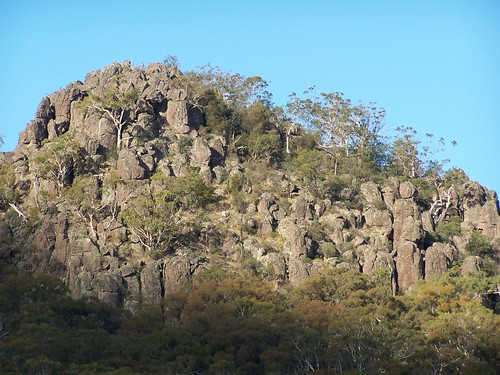
Girls in ridiculous dresses prancing around the bush complaining that it was hot and there were flies. Of course there was. It was the end of our ridiculously hot, dry summers and you lot are prancing around in gloves. And dresses. I mean at 8 years old I'm watching them all trying to walk up bush tracks in dresses and I was thinking they were morons. After 30 mins of this, I usually gave up and went and played in the dirt. Or with a kangaroo or something.
So I never even thought of the book. Until the ABC's First Tuesday Book Club did a poll/show on 10 Aussie Books You Must Read Before You Die and it came number 10 as voted by the public. If you can get around geoblocks and can watch it I recommend it. As it made me think, what did I miss? I also realised, that maybe not seeing the movie was a perfect set of circumstances to read the book.
So I have read it. And what I missed, and was probably too young to get, was the ominous sense of place and the atmosphere. From the outset, you have the oppressive Australian heat beating down on you. You have that feeling of dryness, where you can feel the moisture being sucked out of your body on southern Australian days. If they are not described (I cannot remember as they are so vivid either way) you have that insanely loud sound of cicadas, their constant, shrill trilling/shrieking that screams you are in a hot, dry, remote, people-less place known as the Australian bush. That sound makes the feeling of remoteness resonate through your bones. Already you feel isolated. Then you add in the girls going missing and the element of mystery.
It's a short book, but I had no idea what was happening until it finished. And then I breathed. I mean that in the sense that I felt so tense, and oppressed, by the environment and then the mystery and it's surroundings, I finished the book and could breathe. Maybe I was holding my breath a little. But still those big, deep breaths. Then it hit me. I had no idea what had happened.
I think that is a strength to the book, and really maybe I should mark this as a spoiler, but I had no more of idea what had happened than I did when it occurred. Apparently there is an another chapter that explains all, but I don't think we need it. I am happy leaving it to a mystery of the bush. We have thousands of years of mysteries tied to our bush, and I am fine to give it another. It really is an ominous place. Also, it is a novelty to have a mystery in lit that isn't solved. So yay for an actual mystery.
Obernewtyn
| Image sourced from here |
Here is an Aussie fantasy, conceived by a 16 year old, that is Harry Potter esq before Harry Potter existed. We have a girl who has lost her family due to external forces (in this plot the government) and then is shipped off to an institution where children with special abilities go. And hilarity ensues! No, not really at all. But the story does get started with Elspeth and her misfit friends and their plans and scheming. And then them being sucked into a bigger plot that is going on around them.
I really did enjoy this one. It deserves a place in the mainstream, not just the Australian, YA cannon. It is clever and original, but fits the tropes we expect, even though it was written before they existed. Impressive.
Only real criticism is that even though she edited the story for years, she really does need a thesaurus at times. While the story is great, when you see the same adjective a couple of sentences in a row, it does jar you back to reality. But then again, could I have written such a wonderful story at 16, let alone now? Hells no. So I am cutting her slack where it is due. Will I read the rest? Maybe. But it still doesn't look like a conclusion is coming anytime soon. Luckily this first book is almost a stand alone.
Sunday, 23 March 2014
The Rook
This is an exceedingly clever book. In an nutshell, this book is like Neil Gaiman and Jasper Fforde had a beautiful, beautiful Aussie love child.
Daniel O'Malley is a Canberran author. I somehow, and am still not sure how, managed to score a copy off his Mum (who I actually don't know). But now that disclosure is out of the way, in case I wasn't clear before, this is an absolutely fantastic book.
The Rook is an urban fantasy set in London. We start the book meeting Myfanwy (pronounced Miffany by the way, not Mif-fan-way) Thomas, the protagonist, in a park, in the rain, surrounded by a whole heap of dead guys, wearing gloves. Oh, and she can't remember who she is. In terms of beginnings, not a bad one. We go on to find that Myfanwy knew this was going to happen and has left new Myfanwy lots of info in the form of letters and folders to help her along, and make a choice about her new, inherited life.
This sounds like it could be a terrible way of disclosing information to the reader. But it's not. It's bloody well executed. We find out the lore and background to this urban fantasy and the characters as we need it, in an unjarring way. It bombards you with the info you need in an accessible and believable way. *THIS* is something incredibly hard to do, and honestly a lot of fantasy and sci fi fails at. The amount of times I have tuned out the 3 chapters of mind numbingly boring history of a world in fantasy or sci fi.
That's one element of the cleverness. Another is the world. It is well thought out, plausible, and just fun. I mean, supernatural powers, secret service, tied up in history. What's not to love? But on top of this, the world building is fantastic, and actually rather unique. And that is possibly the highest compliment that one could give an urban fantasy these days.
The most important for me, is this book is fricking hilarious. It is rare that a book in this genre is able to poke so much fun at itself, and everything around it. The humour is just leaking out of it. Whether it is his Australian command of a metaphor or a simile (there is a metaphor or a simile for everything if you try), or his poking fun of Americans (love you all, but some of his lines made me snort beverages out my nose) or any other nationality, or just sarcastic observations in general, the guy is funny.
And it all just made the book a pleasure to read. Action, intrigue and funny. This is my point about the Neil Gaiman and Jasper Fforde Aussie love child. He takes the elements that I love of both authors; world building, story, action, intrigue, and wit. And puts an Aussie spin on it that you would only notice if you are paying attention.
So I know I may be a bit behind the times, but read the book. I applaud and take my hat off to him. I know he is writing a sequel at the moment, and I hope it lives up to the first book. I'll just be watching jealously in the meantime as you all read this one for the first time.
Daniel O'Malley is a Canberran author. I somehow, and am still not sure how, managed to score a copy off his Mum (who I actually don't know). But now that disclosure is out of the way, in case I wasn't clear before, this is an absolutely fantastic book.
The Rook is an urban fantasy set in London. We start the book meeting Myfanwy (pronounced Miffany by the way, not Mif-fan-way) Thomas, the protagonist, in a park, in the rain, surrounded by a whole heap of dead guys, wearing gloves. Oh, and she can't remember who she is. In terms of beginnings, not a bad one. We go on to find that Myfanwy knew this was going to happen and has left new Myfanwy lots of info in the form of letters and folders to help her along, and make a choice about her new, inherited life.
This sounds like it could be a terrible way of disclosing information to the reader. But it's not. It's bloody well executed. We find out the lore and background to this urban fantasy and the characters as we need it, in an unjarring way. It bombards you with the info you need in an accessible and believable way. *THIS* is something incredibly hard to do, and honestly a lot of fantasy and sci fi fails at. The amount of times I have tuned out the 3 chapters of mind numbingly boring history of a world in fantasy or sci fi.
That's one element of the cleverness. Another is the world. It is well thought out, plausible, and just fun. I mean, supernatural powers, secret service, tied up in history. What's not to love? But on top of this, the world building is fantastic, and actually rather unique. And that is possibly the highest compliment that one could give an urban fantasy these days.
The most important for me, is this book is fricking hilarious. It is rare that a book in this genre is able to poke so much fun at itself, and everything around it. The humour is just leaking out of it. Whether it is his Australian command of a metaphor or a simile (there is a metaphor or a simile for everything if you try), or his poking fun of Americans (love you all, but some of his lines made me snort beverages out my nose) or any other nationality, or just sarcastic observations in general, the guy is funny.
And it all just made the book a pleasure to read. Action, intrigue and funny. This is my point about the Neil Gaiman and Jasper Fforde Aussie love child. He takes the elements that I love of both authors; world building, story, action, intrigue, and wit. And puts an Aussie spin on it that you would only notice if you are paying attention.
So I know I may be a bit behind the times, but read the book. I applaud and take my hat off to him. I know he is writing a sequel at the moment, and I hope it lives up to the first book. I'll just be watching jealously in the meantime as you all read this one for the first time.
Thursday, 16 January 2014
The Luminaries
![]() |
| Image sourced from here |
The book is essentially looking at 12 main characters. They all live a West Coast New Zealand town, Hokitika, which is a gold rush town. People have moved around the world in the 1800s chasing gold, and settled in New Zealand. All of these men occupy different roles in this gold rush town and this book tells their story around a particular day. They recount this day to a 13th man. There are another 7 characters that influence and feature in this story. They are all described to you in a neat character table in the front as you would describe astrological entities. It sounds like a lot of people, but at over 800pp not really. If you get lost in the first part just flick back to this chart. I did and it fell back into place. But really, you get to know them all rather well.
This book is a work of art. I do not mean that in a trite saying way. I mean it is literally and intricately crafted and artistically thought through every step of the way. There is stuff I know I do not understand, and another reading may divulge that, but I think I wouldn't enjoy a second reading as much for reasons below. Particularly, the star charts used through out the book. I could work out who would be the main influences in the parts but not the intricacies. I understood that the moving of the stars through time of the different parts influenced the behaviours of the characters somewhat. In fact I could see how the stars influenced the characters, with them being sympathetic and trustworthy in the first part, but as their stars changed so did they, and you couldn't quite tell who to completely believe. It was clever, shifting suspicion to multiple people realistically. However, I didn't get a lot of the individual chapter names, in fact by the end I stopped reading them. But always read the chapter summaries.
I was describing the book to a few people the other day, both online and in real life. The book for me is like a spiral. Or a seashell. You start at the most outmost edge and you follow the ridge further and further in. This is what the book is like. You start at the periphery and get drawn further and further in, with more things exposed and revealed to you the closer you get to the centre. To begin with, it's true, it doesn't quite make sense. And they choose some of the most unsympathetic characters as your introduction. But the more you get in, the more you want to know. You get tighter and tighter towards the reasons, the truths and the characters and their motivations.
Honestly, I thought that she would drop all, if not some, of the balls. Everyone interacts with everyone in their own ways and their own stories. That's 20 factorial storylines! That's a hell of a lot of storylines. But she doesn't drop one! It's astounding.
I will admit I was wondering what the last few parts were about. Then there are more and more subtle reveals. Until the very last page...
This is, for me, an amazing novel. I am astounded how well constructed the whole thing is. And due to holidays, I devoured it. I would have been done days ago if it wasn't for stupid work. This well and truly surpasses all the other Bookers I have read. It actually deserves that damn prize. Read it. Read it now.
Friday, 10 January 2014
The Secret River
| Image sourced from here |
That being said, the book was great. It was a book that tells you the story of William Thornhill, who was born into extreme poverty in London. He turns to being a thief but is given a chance at life by being taken on as a waterman's (boatman's) apprentice on the Thames. He marries the girl he loves, and everything is going well. Until it is not. Like so many people in the 1800s. He is caught thieving again, sentenced to death but reprieved by being sent to the colony of New South Wales.
I feel like I have spoiled half the book for you. But THIS is where the book begins. This book tells the story of so many men and women that came out to Australia in the 1800s. They were shipped from the biggest city in the world to the most remote place on earth. And they survived, and prospered. As a great, great, great, great granddaughter of one of them, that's astounding, and I'm glad they did.
What is the thing that makes me emotional though, is not that part. It's what white Australians did to survive. That's the thing that kicks me in the guts. That's the thing, as an Australian that I know is creeping up on me from every crevice of this book. I understand. I understand the terror. The fear of the unknown. The fear for your family. But it does not excuse at all the horror we unleashed again, and again, and again, and still again even now.
There is still a division in our country. We should be better. We are slightly, but not at all enough. The right calls this a guilt agenda. I do not feel guilty for what my convict ancestor did or didn't do in 1820 or so as he didn't know better. I feel guilty as educated people in 201...4 we are doing terrible things still.
This book was brilliant and humbling. And if you don't know much about the very first settlers to Australia from Britain, it's not a bad way to learn.
Saturday, 4 January 2014
Telesa - #45
![]() |
| Image sourced from here |
Enter Daniel. He's gorgeous. He makes you forget you're an independent human being. You forget you can make any decision in the world. Ever. Because you are a girl and girls cannot exist without hot men. In fact, introduce the hot American doctor scientist guy, and all elements of self determination pretty much go out the window. Us women can't do anything ever without thinking about the men. It comes with the boobs. Rational thought ≠ boobs. It's like teen fiction science or something.
Right so Lelia has special, magical, Samoan mythological powers that has been brought out due to her being back home. Her Mum (FYI Lelia thought she was dead) also has these powers and is tied to some weird sisterhood thing (ie. women with no men are bad). Anyways Lelia needs to work out who she is and what to do and such. With the boys. Because god knows you can't do these things without men.
Problems:
1. Pretty self evident from above. Unless you are a girl. Then you may need a hot boy to explain it to you.
2. The author is from Samoa, educated in America and lives in New Zealand. Besides the sexist co-dependent bullshit discussed above, the magic system is interesting and the problems of mixed island/nation race would speak to a lot of us in the Pacific. So I would say the majority of the time this would be written for us in the Pacific. Until you read it. What Pacific nation do you need to spend 2 pages describing netball to? You need to spend 5 pages describing rugby to us? Rugby is the only thing us Pacific peoples agree on! In fact it's pretty much a religion in half of our countries. However, there were a lot of Samoan culture and words I needed help with, and those explanations were welcome.
But it is obvious from the start this book is written for American audiences, not Samoan or New Zealander or even Aussie. I just feel in order to gain a few more readers the author has excluded her actual readership base. As a Pacific reader, granted a tenuous one, I felt like in the bits of this novel I engaged with and could relate to, I was made to feel like a moron, as if someone was explaining it to a slow, senile 2 year old. For an American reader for example, imagine you read an American novel who spent 2 pages explaining baseball and 5 pages explaining basketball to you. You know. You grew up with is. It's part of you even if you hate it. And it makes the book tedious and patronises the reader.
So when you read a book that tells you that your gender is incapable of making a decision without a man, and then spends pages of bullshit explaining to you your own culture, I get the shits. Once it got rid of all of that and talked about her inherited magic and the Samoan lore it was more engaging, and the actual climax of the book was interesting and enjoyable. I enjoyed the bits between say 70 and 95% of the book. So I liked 15%. Hated the other 85%.
Thursday, 25 July 2013
The Happiest Refugee
| Image sourced from here |
Anh Do is an Australian comedian. I'd link a video but a lot of them are locked down to Aus. So YouTube him on your own time. I've known of him for about 10 years or so now, mainly as he was a regular for the Canberran comedy competition for a few years, would come to our local comedy club every now and then, and then he and a few other comedians from other ethnic backgrounds started touring around together doing shows on growing up in Australia as an immigrant or from an immigrant family.
This book tells his experiences of growing up in Australia as a poor, Vietnamese refugee and the ridiculous things that happened to him and his family. He also details how his family escaped Vietnam in a boat dodging communists and pirates, sometimes not very successfully.
It's eye opening. Even as someone who spends a fair amount of time reading or listening about these issues. The reality is I'm always going to experience Australia as a white, middle class, educated Australian. There are parts I will never fully understand as it's not my experience of this country. I've always known of Vinnie's stores (St Vincent de Paul, a charity/thrift/op shop). They are nothing special. But if you have only owned one pair of clothes and then you walk into a store full of clothes going for $1 each, I can appreciate that this is almost magical. But it will never be an experience I will fully get I am sure.
The book is reasonably well written. It's written like a collection of comedy sketches, with a vague chronological order throughout the book. Because of this, it's really easy to read. I knocked it out in a couple of days. But the last part of the book was a little resume-y. A little too "look at at all the awesome things I have done". Which is great. For a kid who nearly didn't make it to Aus, and turned his life into a success story, that's fantastic! But when it's "then I was on this successful tv show, and then on this famous tv show, and then this one" I was sitting there thinking, "I know mate, I can look up your IMDB profile".
It's a good book. I recommend it highly, especially if you need to experience the world outside of your own world view like me. I would love to beat our general population and politicians over the head with it, pointing out that this is how we humanely deal with and settle refugees. How refugees spend so much time working so hard trying to "earn" the opportunities they have been given by being given a safe place to live.
It's an important book. And it's hilarious.
Saturday, 4 May 2013
What's with the Rainbow?
So to get all political on your arse (like that's never happened before... piffle). I believe that if you love somebody, it doesn't matter what race, creed, gender, colour or sex you are. You should be able to commit to each other in a loving relationship in front of your friends and family if you wish. Not everyone likes the idea of marriage, that's cool, I'm in a relationship with one of them. I'm also not saying a religious organisation should have to perform over unions they do not agree with.
What I think is that a relationship between two people who love each other should be able to have that recognised if they wish.
At the moment I live in a country that seems to be governed by conservatives who are more scared of what the evangelicals in their electorates think than the majority of Australians. I live in a country where an atheist PM (of the debatable "left" party) in a defacto relationship is terrified of the conservative vote. It does my head in.
This is why I have a big rainbow here. It's to say while I personally am not same sex attracted, my family members and friends who are and who want to get married, should be able to. And I will protest, and demonstrate, until they are able to. This is a wonderful thing. Two people willing to stand in front of everyone they know and commit themselves to each other is great. And this rainbow is declaring my support for this cause, and at the end of the month there will be a snapshot of all the websites who display this rainbow and be sent to the Australian Government. Follow the rainbow to see other sites who support this, add the code yourself, or dismiss it (it shouldn't show up again for you, yay for no spam). I don't mind, but this is what it is about.
And those of you who have quibbles, or just want a good rational debate, you should listen to this conservative pollie from New Zealand the other day when they debated, and passed, their own marriage equality bill.
What I think is that a relationship between two people who love each other should be able to have that recognised if they wish.
At the moment I live in a country that seems to be governed by conservatives who are more scared of what the evangelicals in their electorates think than the majority of Australians. I live in a country where an atheist PM (of the debatable "left" party) in a defacto relationship is terrified of the conservative vote. It does my head in.
This is why I have a big rainbow here. It's to say while I personally am not same sex attracted, my family members and friends who are and who want to get married, should be able to. And I will protest, and demonstrate, until they are able to. This is a wonderful thing. Two people willing to stand in front of everyone they know and commit themselves to each other is great. And this rainbow is declaring my support for this cause, and at the end of the month there will be a snapshot of all the websites who display this rainbow and be sent to the Australian Government. Follow the rainbow to see other sites who support this, add the code yourself, or dismiss it (it shouldn't show up again for you, yay for no spam). I don't mind, but this is what it is about.
And those of you who have quibbles, or just want a good rational debate, you should listen to this conservative pollie from New Zealand the other day when they debated, and passed, their own marriage equality bill.
Wednesday, 6 February 2013
Bamboo Palace - #28
I first came across Christopher Kremmer in Uni. I had a friend who forced his book, The Carpet Wars, on me.
Pete, the friend, wore an Akubra all the time and constantly played the harmonica. He was the stereotypical Aussie farm boy who was doing a degree in Middle Eastern politics and Arabic. He once turned up at my house trying to apologise to my Mum as he thought she had taken offence to something he had said or done, by bringing her an entire bucket of turnips, as he knew she was a librarian and this had once worked on his school librarian. Two weeks later he was trying to convince her over the phone to adopt a lamb. He was a very strange, amusing and intense guy. Strange thing is, is he and Mum do a lot of volunteer work together still. I haven't seen him in years. But the thing I still thank him for is intensely forcing that book on me and telling me I had to read it. He was right.
So I asked that next Christmas for Kremmer's new book, Bamboo Palace. It was on Laos, and the Lao royal family and their fate after they were overthrown by the communist regime. I tried reading it, and got bored and distracted, and it has sat on my shelf since.
I picked it up for this challenge and understood why I had put it down in that uni holidays so many years before. I had a hard time with the names of people in this book. It just made it rather hard to read. They were sounds I wasn't used to, and were very long and very similar. I had some background in Islamic history and faith with The Carpet Wars. I didn't so much with South East Asian history or Buddhism. Hinduism more, but that was only really mentioned as Buddhist appropriated rituals.
The beauty of Kremmer's writing is he makes everything accessible. He is so easy to read, and explains everything for you if you don't understand it. If you do, you read it as a recap rather than an annoying explanation. The writing itself in this book is perfect. And towards the end of the book, when he finally slips into what he does absolutely the best, which is retelling people's stories and experiences, I flew through it.
He is also the master of those little snippets of observation that are reasonably obvious, but you need someone to point them out to you. My favourite was right at the end of the book where he said:
"The US-led war on terror has given the Lao exile movement hope that small authoritarian regimes like the Lao PDR may face pressure to democratise. Yet America's use of detention without trial to hold suspected Islamic militants at Camp Delta in Guantanamo Bay, Cuba, can only undermine Western protests against regimes that use similar methods against their own people." - p242.
He wrote that in 2003. The difference I see now, is that those same words could be applied to his own country 10 years on in 2013, to our Government's treatment of refugees. And that is rather heartbreaking, not just for what it is, but also as earlier in this book he talks about Lao people coming to Australia as refugees to escape the possibilities of Lao gulags. If this was happening now, these people would be fleeing one type of gulag, for essentially another.
Pete, the friend, wore an Akubra all the time and constantly played the harmonica. He was the stereotypical Aussie farm boy who was doing a degree in Middle Eastern politics and Arabic. He once turned up at my house trying to apologise to my Mum as he thought she had taken offence to something he had said or done, by bringing her an entire bucket of turnips, as he knew she was a librarian and this had once worked on his school librarian. Two weeks later he was trying to convince her over the phone to adopt a lamb. He was a very strange, amusing and intense guy. Strange thing is, is he and Mum do a lot of volunteer work together still. I haven't seen him in years. But the thing I still thank him for is intensely forcing that book on me and telling me I had to read it. He was right.
So I asked that next Christmas for Kremmer's new book, Bamboo Palace. It was on Laos, and the Lao royal family and their fate after they were overthrown by the communist regime. I tried reading it, and got bored and distracted, and it has sat on my shelf since.
I picked it up for this challenge and understood why I had put it down in that uni holidays so many years before. I had a hard time with the names of people in this book. It just made it rather hard to read. They were sounds I wasn't used to, and were very long and very similar. I had some background in Islamic history and faith with The Carpet Wars. I didn't so much with South East Asian history or Buddhism. Hinduism more, but that was only really mentioned as Buddhist appropriated rituals.
The beauty of Kremmer's writing is he makes everything accessible. He is so easy to read, and explains everything for you if you don't understand it. If you do, you read it as a recap rather than an annoying explanation. The writing itself in this book is perfect. And towards the end of the book, when he finally slips into what he does absolutely the best, which is retelling people's stories and experiences, I flew through it.
He is also the master of those little snippets of observation that are reasonably obvious, but you need someone to point them out to you. My favourite was right at the end of the book where he said:
He wrote that in 2003. The difference I see now, is that those same words could be applied to his own country 10 years on in 2013, to our Government's treatment of refugees. And that is rather heartbreaking, not just for what it is, but also as earlier in this book he talks about Lao people coming to Australia as refugees to escape the possibilities of Lao gulags. If this was happening now, these people would be fleeing one type of gulag, for essentially another.
While I loved the writing and the accessibility I have to be honest that the subject matter didn't grab me. Unlike The Carpet Wars, which I read in a couple of days, I struggled with this book. And that's not the authors fault. This ís his second book on Lao, so he personally obviously loves the region and this story. Just wasn't quite my cup of tea. But if it's yours, I highly recommend it.
Labels:
52 Books,
Alphabet,
Around the World,
Australia,
Books,
Laos,
Non-Fiction,
States,
Thailand,
Vietnam
Subscribe to:
Posts (Atom)